


Combination Therapy for Metastatic Eye Cancer
Researchers at LUMC have discovered that a combination of liver perfusion and immunotherapy significantly improves the prognosis for patients with metastatic ocular melanoma.
This is the first study using liver perfusion to demonstrate a clear improvement in survival for this rare form of cancer.
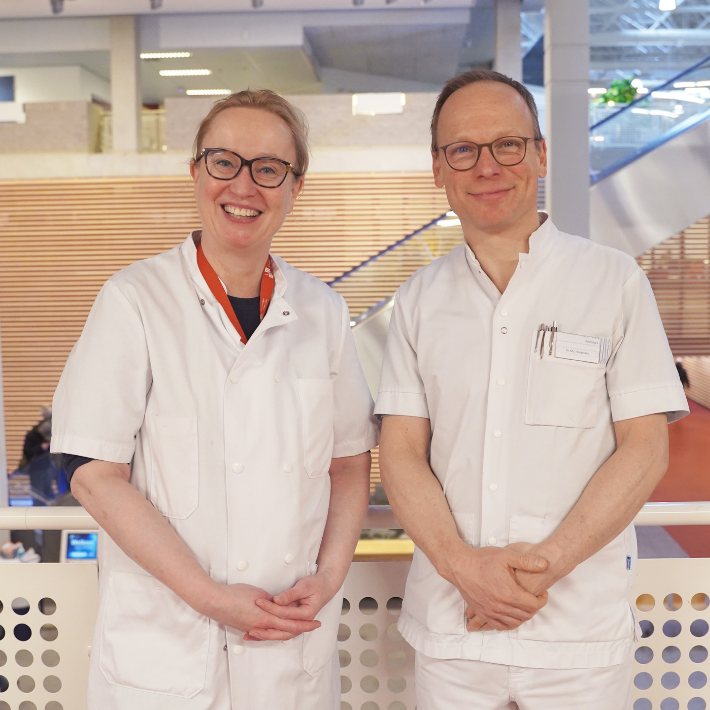
Medical oncologist and professor Ellen Kapiteijn and interventional radiologist Mark Burgmans investigated a new combination therapy for metastatic eye cancer. A total of 76 patients participated in the CHOPIN study, divided into two groups. Both groups received liver perfusion.
A liver perfusion is a treatment in which blood flow from the liver to the rest of the body is temporarily blocked. This allows doctors to administer a high dose of chemotherapy directly into the liver. The blood leaving the liver is collected, filtered outside the body to remove the chemotherapy, and then returned. This ensures that only the liver receives a high dose of chemotherapy, while the rest of the body remains protected. The LUMC is the only center in the Netherlands that performs this targeted treatment.
One group received only chemotherapy via liver perfusion. The other group also received immunotherapy (ipilimumab and nivolumab). This immunotherapy is also used to treat metastatic skin melanoma and stimulates the patient’s immune system to attack cancer cells on its own.
The results are promising. In patients who received the combination therapy, the disease remained under control for a longer period, and they lived longer on average than patients who received liver perfusion alone. The percentage of patients who were still alive after one year and whose disease was under control was three times higher among patients who received the combination therapy than among those who underwent liver perfusion alone.
Although there were more side effects with the combination therapy, they were temporary and generally did not require additional treatment. This is the first study in patients with metastatic ocular melanoma to clearly demonstrate that a combination of liver perfusion and immunotherapy can improve survival.
The researchers believe that this approach is an important new treatment option for patients with metastatic ocular melanoma.