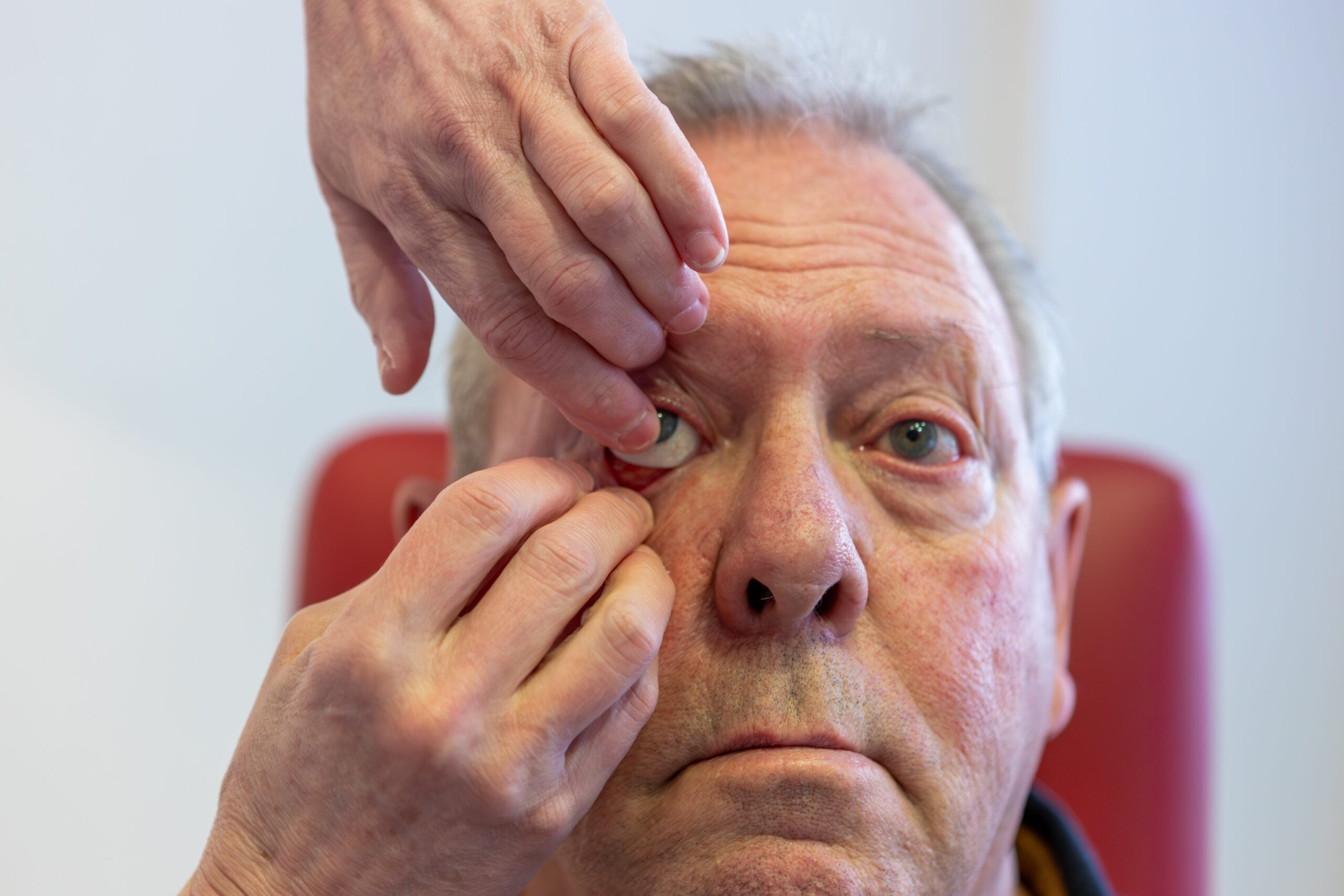
February 29: Rare Disease Day
Today, February 29—the rarest day of the year—is International Rare Disease Day. On this day, patients, doctors, nurses, and researchers raise awareness about rare diseases.

These diseases are often hereditary and chronic. In some cases, these diseases can even be fatal. That is why it is important to raise global awareness of these diseases so that more funding becomes available for research. This also applies to the rare eye diseases anophthalmia/microphthalmia and retinoblastoma.
Many people have a rare disease!
The name speaks for itself: rare diseases are not very common. Yet there are many people who have a rare disease. This is because there are more than 7,000 types of rare diseases. In the Netherlands, about 1 million people have a rare disease. So the idea that rare diseases affect only a few people is a concerning misconception.
What is a rare disease?
A disease is considered rare if fewer than 1 in 10,000 people have it. For example, nearly 1 in 5 types of cancer are rare. About 72% of rare diseases are genetically determined. Additionally, 70% of rare diseases begin in childhood.
Anophthalmia and microphthalmia
Due to an error in chromosome division during the first months of pregnancy, one or both eyes may not develop properly during pregnancy, or an eye may not form at all. In the Netherlands, between 6 and 54 children are born each year with anophthalmia or microphthalmia. Microphthalmia is a condition in which one or both eyes are smaller than normal. In anophthalmia, on the other hand, one or both eyes are absent or very small.
Retinoblastoma
Retinoblastoma is a rare form of cancer in the retina of the eye that usually occurs in children under the age of five. In about 40% of cases, retinoblastoma is caused by a genetic predisposition, and in the remaining 60%, the cause is not genetic. Even if a patient with retinoblastoma is the first in the family to be diagnosed, retinoblastoma can still be hereditary. In the non-hereditary form, retinoblastoma is always limited to one eye. In the hereditary form, both eyes are often affected. However, in approximately 15% of patients with unilateral retinoblastoma who have no family history of the disease, a genetic predisposition is still present. It is therefore always advisable to conduct genetic testing to determine whether a genetic predisposition is present.