


Rachel Kalmann’s Inaugural Lecture: “It’s Your Eyes”
On February 10, our president, Tonnie, attended Prof. Dr. Rachel Kalmann’s inaugural lecture.
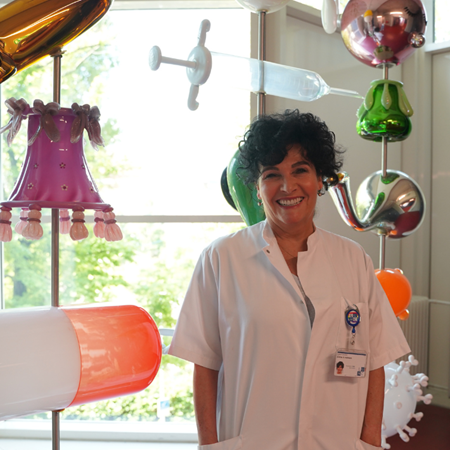
Prof. Dr. Kalmann explains: “In my inaugural lecture, I’ll take the audience on a journey through the history, current state, and future of ophthalmology, among other topics. I’ll pay special attention to diseases of the orbit, which is my own area of expertise.”
“I want to explore how MRI images can be used to distinguish even more accurately between different conditions affecting the eye socket. Is something malignant or benign? Techniques for this already exist, but I want to investigate how we can further refine them so that we can make diagnoses sooner and start treatment earlier.”
The title of your inaugural lecture is “It’s All in the Eyes.” Is that something you hear often in the exam room?
“Very often. It’s also something my colleagues can really relate to. People often ask if eye surgery isn’t very dangerous. A nurse practitioner at UMC Utrecht, where I used to work, found that providing explanations and paying attention to a patient’s concerns about surgery alleviates their fear and improves the outcome. A lack of information increased anxiety about the surgery. This was studied among people who had to undergo an eye-removal surgery. This shows that it’s important to take an interest in the person behind the patient and to look beyond just the eyes. That’s comforting for the patient, but it often makes your own work more enjoyable as well.”
Source: LUMC