



In our country, approximately a quarter of a million (!) people suffer from severe vision loss. That number continues to rise due to the aging population and, particularly among younger people, because of spending long periods of time staring at screens of all sizes. There are quite a few things that people with limited vision can do to better protect themselves. We’ve listed them for you:
Wear sunglasses
Yes, it makes perfect sense: sunglasses. UV radiation is simply not good for you—not for your skin and certainly not for your eyes. The risk of cataracts or macular degeneration increases without adequate protection. So be sure to wear a good pair of (Polaroid) sunglasses—ones with 100% UV protection. Pay close attention to the product description! It must say “100% UV” or “UV400.” Don’t settle for anything less! Also keep a close eye on children, as they are generally more sensitive to bright light. They have larger pupils, and their eye lenses contain less protective pigment than those of adults. So get them used to always wearing sunglasses outdoors—especially at the beach or while participating in winter sports.
No tobacco and no alcohol
So are we not allowed to do anything at all? Of course we are, but if you smoke a pack a day, for example, you double your risk of developing cataracts (and, of course, a whole host of other health problems). Eye diseases like glaucoma and macular degeneration also become a much greater threat. It’s no wonder doctors say that some people can literally smoke themselves blind. And alcohol? It’s well known that it inhibits vitamin absorption in the liver. That’s obviously bad for your immune system. Excessive alcohol consumption can lead to red and dry eyes. So: take it (a little) easier with that next drink!
Be careful with contact lenses
Of course, everyone knows that soft contact lenses increase your risk of eye infections. So be sure to take them out before showering or swimming, and always make sure your hands are clean when putting them in or taking them out. Of course, this also applies if you wear hard lenses. Isn’t all this a bit over the top? Not if you know this: the Acanthamoeba parasite can be found in water (even tap water) and also in saliva—here it comes. That tiny little monster with the long name likes to settle on the cornea (the outermost layer of our eye) and can then cause a very painful infection. Or even worse. We’ve even had members who’ve lost an eye because of this bacterium. So be careful!
Stay away from fireworks
Or rather: get rid of all those fireworks. Politicians are still burying their heads in the sand, because the fireworks industry’s lobbyists know exactly which members of parliament and government officials are happy to be wooed. So the possession of fireworks is still not prohibited. Soccer hooligans who throw fireworks into the visitors’ section, criminals who hang suspicious packages on doors or smuggle cars full of fireworks across the border—unfortunately, they still have little to fear… Every year, children suffer burns from those “harmless” sparklers, teenagers try to relight that firecracker that didn’t go off, and spectators come out to watch all the fireworks on the street. Eye hospitals see the consequences every New Year’s Eve. Eye specialists issue increasingly urgent warnings every year. To no avail? Hopefully, we’ll one day see a total ban on both the sale and possession of fireworks!
Screens: in moderation
Myopia is another name for nearsightedness. It is an eye condition in which glasses with negative-power lenses are needed to see clearly, because the eyeball has grown too long. Children with a prescription of -6 or higher have a 1 in 3 chance of becoming severely visually impaired or even blind later in life. Therefore: do not give children under the age of two a tablet or phone to hold. After 20 minutes of screen time, have older children look into the distance for 20 seconds and make sure they spend at least 2 hours a day outdoors. Not only for exercise, but also because daylight triggers the production of dopamine and promotes healthy eye development.
Take care when doing home improvement projects and gardening
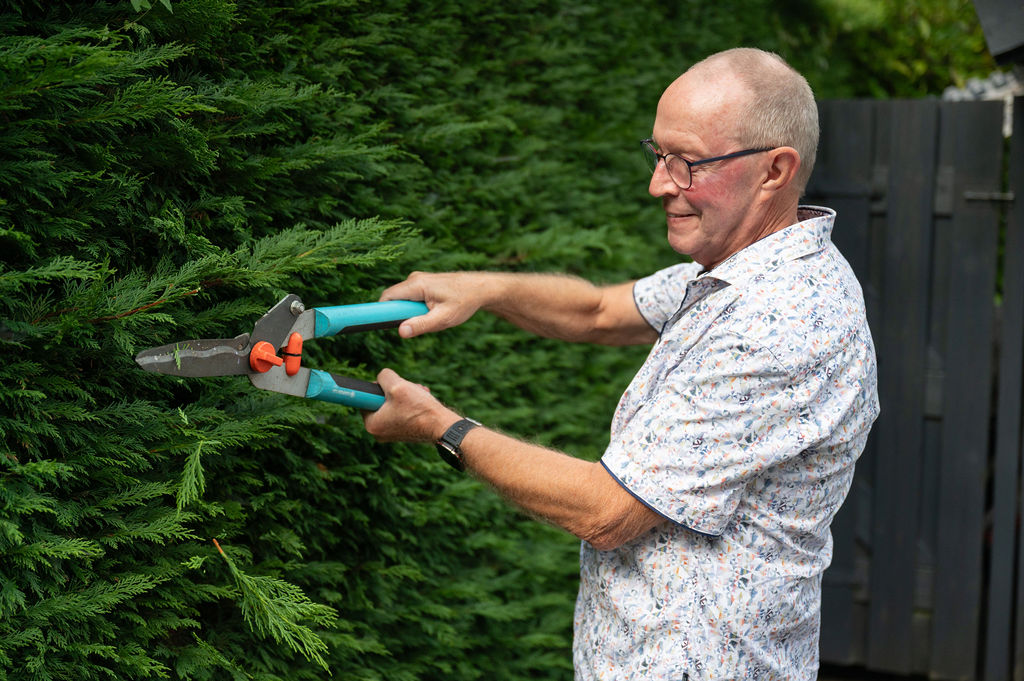
It seems so harmless. Just sawing a little board or doing some pruning in the garden. Put on safety goggles for that? Are you crazy? It’ll be over in a flash. But that wood splinter or rose branch could easily end up in your eye and cause all kinds of trouble. That’s why: wear a good pair of safety glasses. Keep them with your DIY supplies and garden tools. That way, you won’t have to spend time looking for them, and you can get on with your work safely!
Think about the risks involved in exercising
You can exercise just fine with one eye. You’ll find that your brain will get used to this “different” sense of depth. Just read Zoë’s article. Playing sports always carries a certain risk anyway, but if you only have one good eye, you do need to be a little extra careful. So: Avoid unnecessary risks. Think carefully about what you can and can’t do. Talk to your coach and teammates about your playing style. Consider wearing protective eyewear. But above all, have fun with what you’re doing. And if it really doesn’t work out, there are plenty of other sports you can enjoy just as much.
