


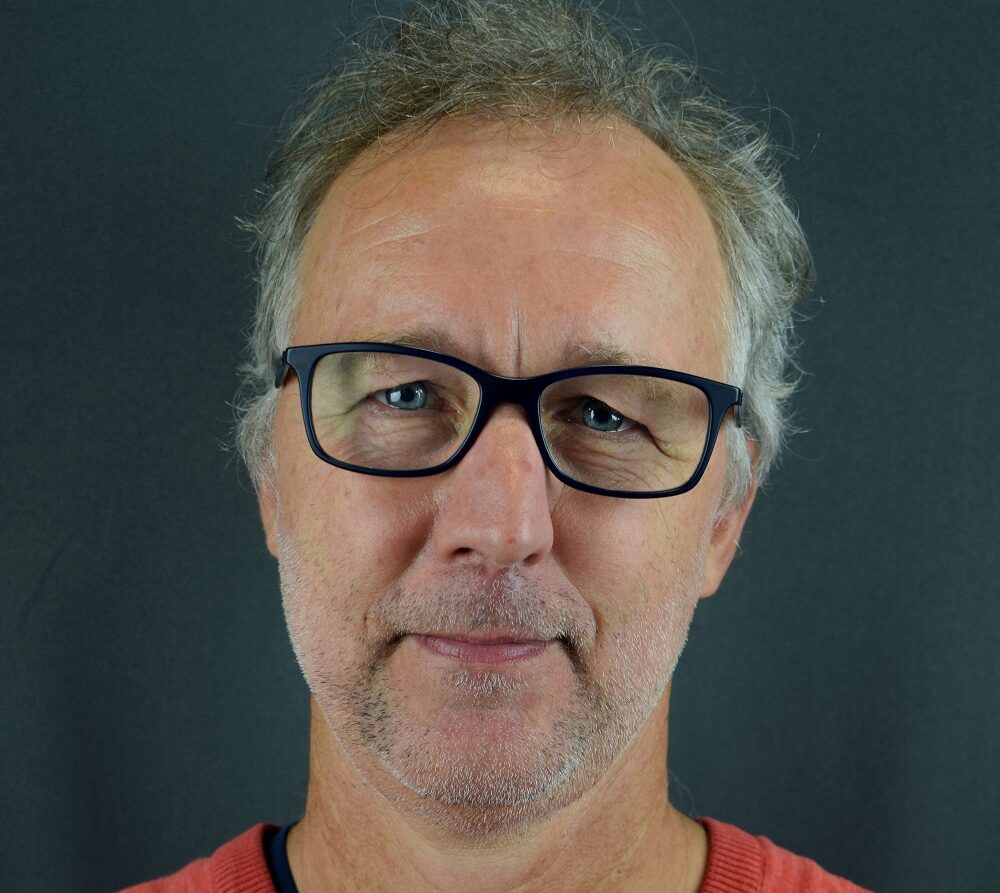

“Exercise is good for the body and mind,” says Wilbert. “That’s why it’s also very important to keep moving if you’re dealing with an illness or an accident. The most important thing is to do something you truly enjoy. Sometimes there are challenges, but we can often overcome them with simple aids or adjustments. Our motto is: Normal whenever possible, adapted if desired.”
Tips from Wilbert
Wilbert gives a few examples: “If you’re seeing with one eye, for example, you can use a brightly colored ball or shuttlecock. You can also adjust the rules of the game, such as agreeing that in tennis, the ball can bounce twice. It can also help in field hockey and soccer to really think about your position on the field. What works best is often very personal. In many cases, depth perception can be trained, but you do have to practice a lot. Some people pick it up faster than others. That’s often genetically determined. How good are your motor skills? And it’s also important, for example, not to play tennis while wearing varifocal glasses. The varying lens strengths make it especially difficult to see when serving. Do you like biking, but have trouble keeping your balance? Then consider a tricycle or try riding a tandem bike—that way, you don’t have to steer yourself. There are also “buddy” groups in various cities where you can walk, bike, and run together.”
Tips from peers
- Take some private lessons. Trainers are often willing to give a few lessons at a discounted rate.
- Tell your fellow athletes about your visual impairment. That will help them understand.
- In a ball sport: choose the side where you have the best view.
- When mountain biking: ride at the back of the group and make sure you don’t have a blind spot.
- Wear a cap or a sun visor.
- Wear safety glasses, possibly combined with a contact lens, to protect your good eye.
- Don’t ski in the fog.
- When you’re biking outside in the dark during the winter, it’s hard to see the road ahead clearly. That’s why you should install a wide-beam light on your bike.
- When riding a horse: you tend to lean too much toward the side of your eye prosthesis. Be mindful of that.
- Start by practicing with a balloon. It moves more slowly than a ball, and it won’t hurt if it hits your good eye. Later, switch to a real ball, and only then move on to a small tennis ball.
More information
If you have any questions, please contact the Help Desk at: bewegenensport@visio.org
On our YouTube channel , you ‘ll find videos about exercising with one eye.
You’ll find lots of tips on the EduVip website.
In the search field of the Visio Knowledge Portal, enter the keyword Sports in the search field to find more articles.
Sports coaches can find information about sports for people with visual impairments at Zichtbaar Sportief.
Here you’ll find a list of sports clubs with facilities for people with visual impairments.
For when you want to go running with a buddy.
Sports club for people with visual impairments.
