




How does vision actually work?
Many people think we see with our eyes. But that’s only partly true. Your eyes capture the image, just like a camera does. But it’s not until the image reaches your brain that it’s processed. That’s where it becomes clear what you’re seeing.
So what exactly happens in your brain?
The image reaches your retina through your eye. At that point, the image is still upside down. Your brain automatically flips the image the right way. Then it makes sure you understand what you’re seeing. It recognizes shapes, colors, and movements. Your brain converts all that information into a clear and recognizable image.
What is the difference between looking and seeing?
Looking means focusing your eyes on something. Seeing means that your brain understands what you see. So you can look at something without actually seeing it. That’s why we say: seeing doesn’t just happen with your eyes, but also in your head.
What if your vision isn’t clear?
If the image isn’t focused properly on the retina, your vision will be blurry. This happens, for example, with nearsightedness. In that case, you can see things up close clearly, but not things far away. With glasses or contact lenses, you can ensure that the image is focused properly on the retina, so your brain can process it correctly.
Why is learning to see important when you start seeing with only one eye?
For people who see with only one eye, the image comes from just one side. Your brain has to work extra hard to make sense of it. That’s why it’s important to practice. This way, you can better process what you see.
What is the field of vision, and how does it change when you use only one eye?
Your field of vision is everything you see without moving your head or eyes. With two eyes, you see about 180 degrees. That’s almost everything happening in front of you, to your left, and to your right. With one eye, you see less: about 150 degrees. Your nose gets in the way on one side. With two eyes, your eyes compensate for each other’s blind spots. With one eye, that’s no longer possible.
How does that affect your daily life?
You need to turn your head more often to see everything. For example, when you’re crossing the street or when you bump into someone walking in your blind spot. It takes a little more effort, but it’s something you can easily learn. After a while, it’ll come naturally.
What is depth perception, and why is it important?
Depth perception means being able to estimate how far away something is from you. This is especially useful for things that are close by—such as pouring water or inserting a key into a lock. When you have two eyes, your brain creates an image with depth based on the slight differences between what each eye sees.
Can you perceive depth with just one eye?
Not in the same way. You’re missing the actual sense of depth. But your brain can still estimate how far away something is in other ways. For example, because objects that are farther away appear smaller. Or by looking at shadows or light. Your brain uses those cues to give you a sense of depth anyway. Especially if you practice, you’ll get better and better at it.
Are children better at that than adults?
Yes. Children who have lived with only one eye from an early age naturally learn to see differently. They move their heads slightly from side to side and use that to perceive depth. They don’t know any better and quickly find clever ways to cope. Adults usually still have to learn this, but they often manage it just as well.
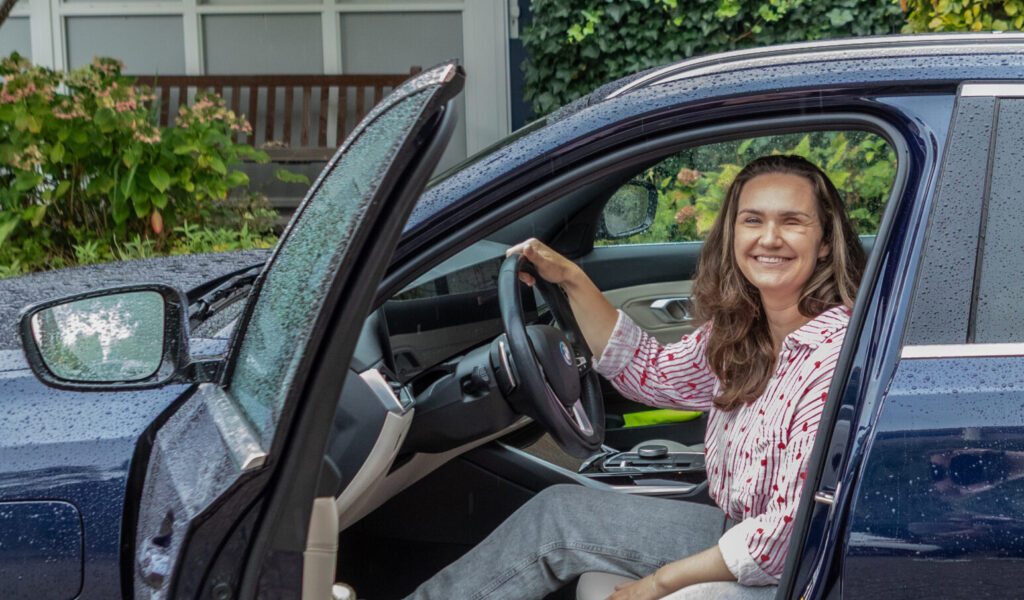
Can you drive with one eye?
Yes, in many cases. For a standard driver’s license (A, B, or E), you’re allowed to drive if your vision in your better eye is at least 0.5 and your field of vision is at least 120 degrees. You also can’t have any blind spots in the center of your field of vision. If you meet these requirements, you may continue to drive. You’re not required to report this to the CBR, unless you’re unsure.
What if you already had your driver’s license before you lost your eye?
In that case, you usually just need some time to get used to it. You must wait at least three months before driving again. In the Netherlands, there is (as of yet) no legal obligation to report a medical condition or a change in your health status to the CBR. If in doubt, you can fill out a self-declaration form with the CBR, which can then assess your specific situation. When renewing your driver’s license, you must always fill out a self-declaration form and therefore must also report the loss of vision in one eye.
What if you want a commercial driver’s license, such as one for trucks or buses?
In that case, the rules are stricter. You must have a visual acuity of at least 0.8 in one eye and at least 0.1 in the other. If you have only one good eye, you generally can no longer obtain a driver’s license. But there are sometimes exceptions. For example, if you already have a full driver’s license, you can take a practical test at the CBR. If you pass that test, you can receive an exemption. This exemption is valid only in the Netherlands, so you won’t be allowed to drive internationally.
What can you do if you feel unsure while driving?
That’s perfectly normal. Many people find it nerve-wracking at first to drive with just one eye again. You can take a few driving lessons. There are even driving instructors who specialize in working with people who have impaired vision. Additionally, installing extra mirrors on your car can help. Koninklijke Visio also offers a special program to support people with low vision in driving. With help and practice, your confidence will often return.
More information
On this page , you ‘ll find more information about driving with one eye. You’ll find tips and the legal requirements.
