


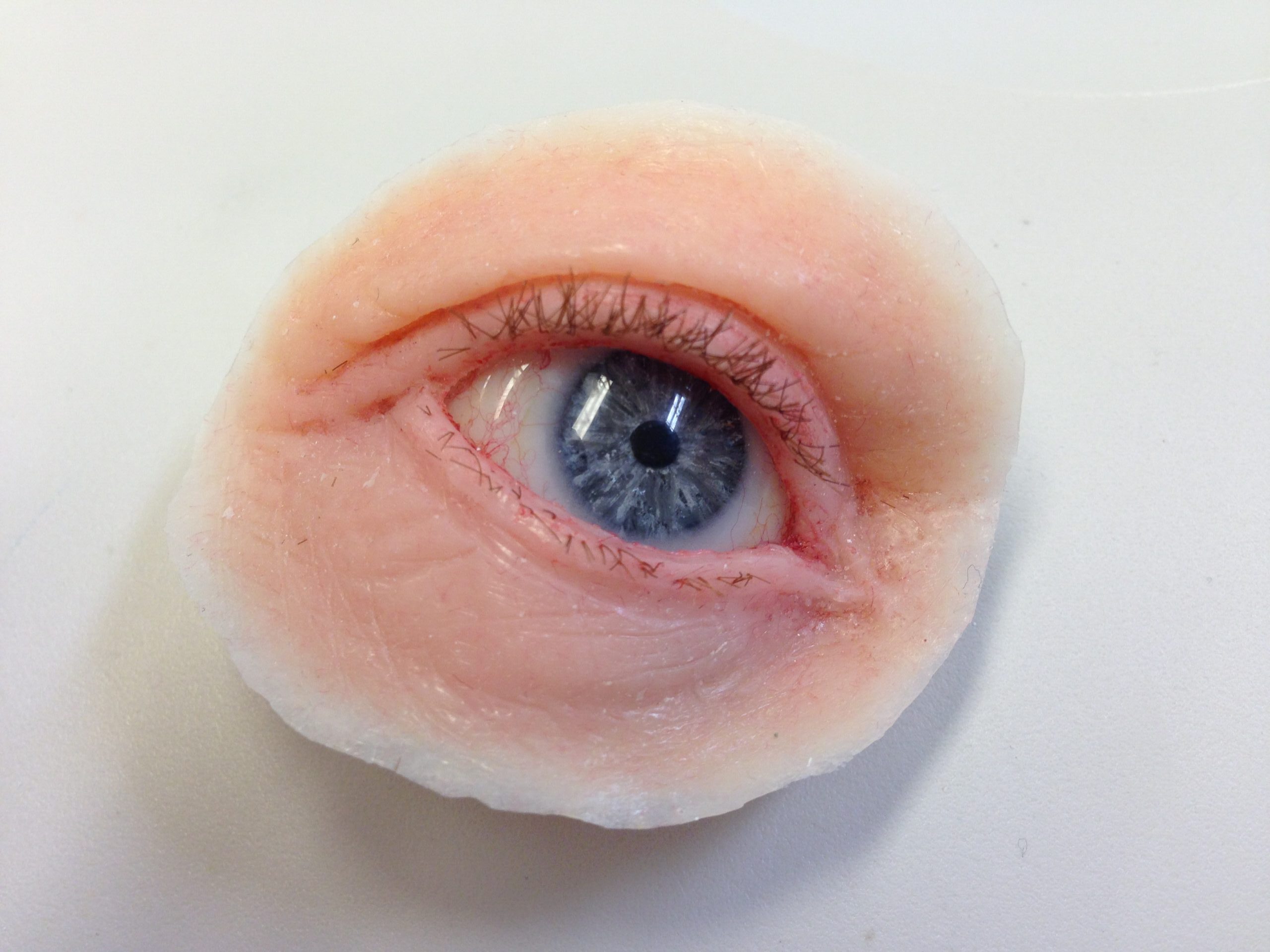

Don’t get me wrong. It’s not that the child asking the question is embarrassing—it’s the fact that the mother dragged the child away. If she had given the child the chance to ask me the question, I would have explained that I had surgery, that my eye couldn’t be fixed, and that I now have a prosthetic eye. Then it would have been clear to the child and any adults who might have been listening.
A child keeps looking at you when they see “something special” because they want to know what they’re seeing. Parents say, “Don’t ‘stare’ like that—it’s not polite.” I’d call it studying. My little nephew Charlie was a few months old when he was studying my face and suddenly started squinting really hard. Charlie’s father was standing behind me and got a little panicked because his son was squinting so much. I
had to laugh because I’d noticed before that children often squint when they look at me. The child focuses his or her gaze—and thus their attention—solely on my “good, moving eye.” The other, still eye doesn’t participate and is probably not interesting to look at.
Tommy—my daughter’s little dog—also looks at me with a pleading expression and then suddenly shifts his gaze to just one of my eyes. It’s really strange and also funny to see! Maan—my 7-month-old granddaughter—is now carefully studying everything she sees, including faces. The amazing thing is that Maan doesn’t look at the moving eye at all, but at the still, fake eye instead. She stares at it with a questioning look that seems to say, “Hey, why aren’t you joining in?” I sincerely hope she’ll ask that question once she can talk.
Wait a minute!
Eight-year-old Lotte was staying with her grandparents when I came to visit. I could tell Lotte wasn’t sure how to look at me. She’d occasionally wink at me, probably because I did the same
. But Lotte didn’t ask any questions. When I was about to leave, Grandpa walked me to the car to help me drive through the rather narrow gate at the driveway exit. I had just started the car when I heard Grandma call out, “Wait a minute!” She came running over with Lotte because Lotte wanted to take a good look at my eye. She had noticed something was off, but it was confirmed because Grandpa had to help me see as I was driving away. Grandma was wise enough to pay attention to that. I turned off the engine again and took off my glasses so Lotte could see the prosthesis clearly. I told her the short, kid-friendly version. Lotte nodded that she understood and sighed with relief that she got it. I found it really touching!
Do you wear a prosthesis?
Adults usually don’t ask questions, but they do look searchingly at your face, trying to figure out what’s wrong. But sometimes they do ask. I find that surprising. For example, someone recently asked me, “Are you wearing a prosthesis?” My response was, “Yes, and how interesting that you’d ask!” He told me that his wife also has an epithesis and that she’d prefer it if people asked about it rather than just staring. Well, because asking questions is how you learn! Needless to say, I completely agree with her!
Anita Hol-Bubeck
