


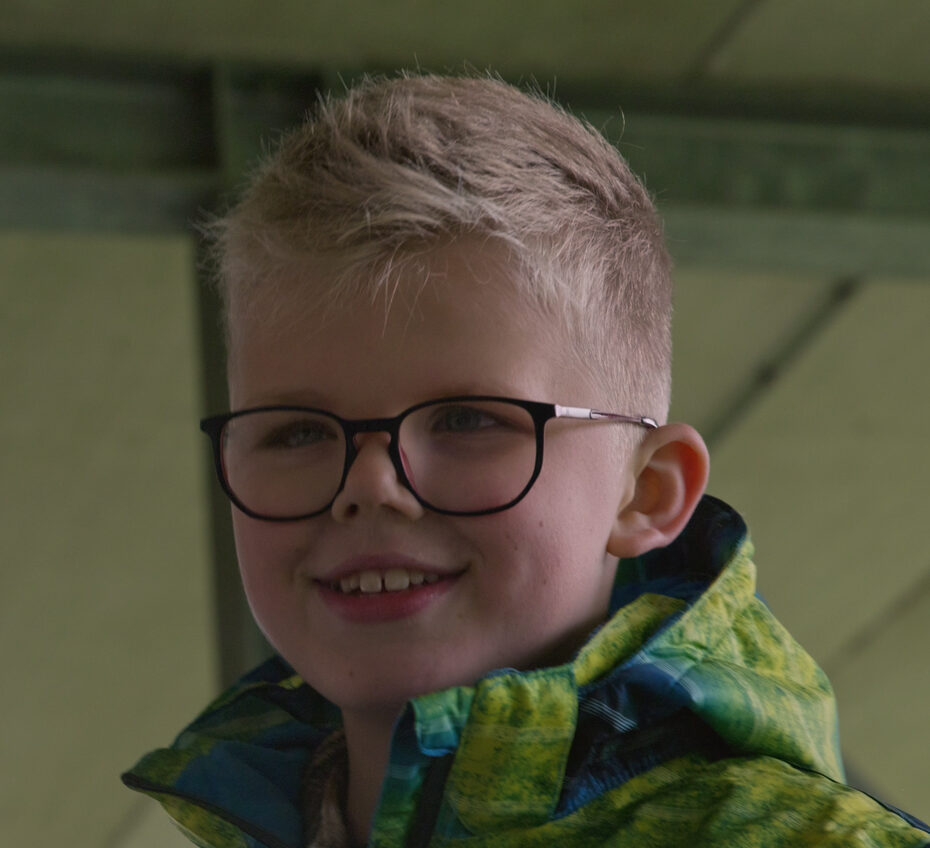

After this years-long struggle, we as parents took our first steps into “normal” life, filled with anxiety. At first, you’re terrified that the cancer will return; then the practicalities start to take shape. Can he attend a regular elementary school? Can he ride a bike on his own? Does he make friends easily with other children? Will he be bullied? During treatment, out of self-protection, we always assumed the worst-case scenario. That way, things could only turn out better than expected. Hope is just disappointment in the making, and we couldn’t handle that. We effortlessly applied that pessimistic mindset to life after cancer.
It was Milan who taught us to be positive. With every step he took, he showed us what was possible. He showed us that the world isn’t always a cesspool of depravity, but a playground where you might fall, but you always get back up.
Until a few months ago. That’s when Milan was reminded of the scar left by the cancer—specifically, when he was scheduled to receive the vaccine for 9-year-olds. The moment he arrived at the doctor’s office, he panicked. He clung to a pole and wouldn’t let go. The look in his eyes betrayed a deep-seated fear that had never surfaced until that moment.
The sudden vulnerability of our eternal optimist was as surprising as it was painful. We immediately made the connection to his battle with cancer. That moment reopened a wound that had seemed to have healed in recent years. Once again, it was Milan who, in all his wisdom, managed to reassure us. A week later, he had this to say about it: “When I got the shot, I thought of the very worst thing that could happen. That was dying. That scared me terribly at that moment, and that’s why I really didn’t want it. But later I thought: I’ve had so many shots as a baby, and I’m still alive. So it can’t be that bad after all.”
A helpful thought. That’s what they call it in the world of cognitive behavioral therapy. Milan is currently undergoing this therapy to help him overcome his fear of needles. The fact that this way of thinking is so deeply ingrained in his DNA is a gift. And for us, it’s a helpful thought for everything we’re still going to face.
Jan Burger
