



For as long as I can remember, I’ve been incredibly interested in technology, gadgets, and anything with a plug. As a little boy, I’d watch *Star Trek* with my mouth agape—not only was there a blind man who could suddenly see thanks to technology from the future, but I also thought it would be wonderful to be able to talk to a computer that could then do everything for you.
It’s now 2025, and my dream is slowly becoming a reality. I went on vacation this summer and bought the Meta Ray-Ban AI Glasses—why? I’d love to tell you!
But wait—don’t take your credit card out of your wallet just yet. The glasses are a collaboration between Ray-Ban and Meta, the company behind Facebook and Instagram, among others, so keep in mind that you’re always responsible for your privacy settings. Also, as of this writing (September 14), the glasses aren’t officially available in the Netherlands. The AI functionality basically only works in countries where the glasses are for sale and doesn’t speak Dutch. However, there are now very strong rumors that we’ll see a Dutch launch in a few days, so the world might look very different by the time you read this.
What is the Ray-Ban Meta?
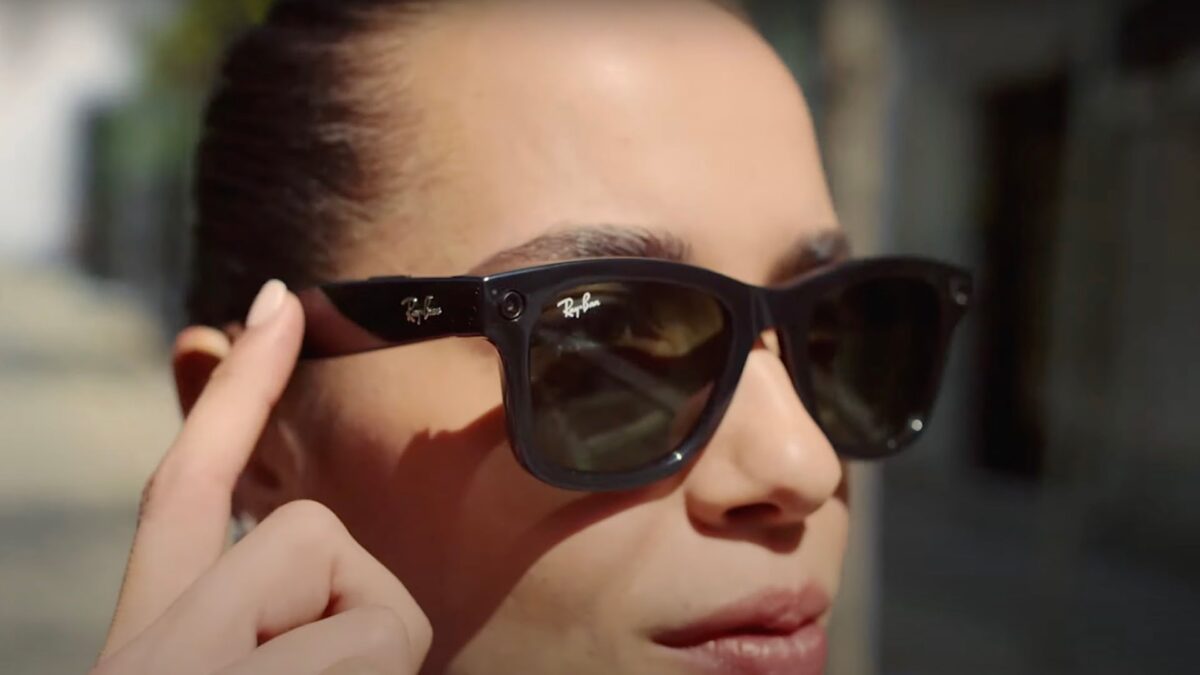
The Ray-Ban Meta is a pair of sunglasses that actually looks quite ordinary; you really have to look closely to realize that there’s technology hidden in these frames. You can choose from clear, tinted, or Transitions lenses, and even custom prescriptions are no problem at all.
On the front of the glasses, on the left side, there’s a tiny camera that can take photos and videos, on the right side, there’s a light that turns on when you’re recording a video or taking a photo, and right near your ears are two speakers so you can clearly hear everything Meta AI has to say.
What do I do with it?
The main feature of the glasses is the camera. Not only does this mean you always have a camera on hand to capture the perfect moment, but the Smart AI Assistant can also help you with various tasks based on what the camera sees. Let me give you some examples:
The day after I bought my glasses, we headed to the Frost Science Center in Miami. That was my first time using the glasses in the real world—and it was also the most impressive experience. I’d visited museums before, but I’d always just taken the labels next to the artworks for granted. Sure, I looked at the art, and I enjoyed it, but who made it or what the story behind it was—I had no clue. But now everything was different! I looked at the sign and said, “Hey Meta, look and read this.” I heard a little click, so I knew a photo was being taken, and within a few seconds, the text was read aloud flawlessly. No phone, no viewer, no help needed—just me and my glasses. I’d never experienced anything like this before, and it felt like my world had been turned upside down.
Of course, we had to grab some lunch. And in true American style, we popped into a fast-food chain. Unlike other restaurants, there isn’t just a menu available; instead, you have to rely on a sign hanging far behind the cash registers. I was a little nervous about whether it would work, but there I went: “Hey Meta, look and read the menu.” It neatly read out to me, line by line, everything on the menu. But with so many choices, that wasn’t exactly ideal. Then I realized that AI models are integrated into the system, so I wanted to see how far I could take it: “I’m looking for a light lunch option that isn’t fried and is a good option for me to share with my 4-year-old daughter.” And sure enough, instead of the entire menu, I was neatly told what would suit me best, including the price.
But it’s also nice to have this handy helper with me at home. Recently, I wanted to reheat a pizza in the oven (don’t judge me). It’s a task I’d normally grab my phone for, using the magnifying glass to read the instructions, but this time I simply asked my glasses to read the instructions aloud, and before I knew it, the pizza was in the oven without me having to use any other tools.
The glasses can also read Dutch aloud
Even though the glasses don’t speak Dutch, they still get it. If you want them to read a Dutch text aloud, it sounds a bit like an American trying to speak Dutch, but if you ask them to translate it, they translate the Dutch text perfectly into English, and you hear exactly what it says. Pretty handy, because my 4-year-old daughter wanted to go down a slide until I used my glasses to read the sign that said she actually has to wait another 4 years.
There are still so many possibilities, from sending and reading messages to listening to music, podcasts, or your navigation system through your glasses without having to put anything in your ears.
Integration with Be My Eyes
But I don’t want to keep one very special feature from you. The well-known Be My Eyes app integrates perfectly with the glasses. As soon as you ask the glasses to call a volunteer, the person on the other end can see what’s in front of you through the camera on your glasses, and you can get the help you need without having to do anything on your phone.
I’m incredibly optimistic about the future. It’s certainly not perfect yet, but the fact that we can buy this technology for under $400 shows that we’re only at the beginning of an even bigger revolution.

