



After completing his training at Erasmus MC, Gijsbert Hötte began working at the Eye Hospital. “My areas of expertise include tear duct surgery, treatment of eye cancer, eye removal, and eyelid surgery. I look forward to contributing outside the hospital as well, through the OOG in OOG Association.”
Are many eye removal surgeries performed at the Eye Hospital?
Paridaens: “These days, we remove an entire eye less often, as we used to do frequently in cases of ocular melanoma. That’s because we now have other treatments for this form of eye cancer, such as proton radiation therapy.” and Targeted radiation therapy. As a result, surgery is needed less often.
“But the Eye Hospital still performs a lot of eviscerations these days. That’s a surgery in which the inside of the eye is removed, but the outside remains intact. People from all over the Netherlands come to us when they have a painful, blind eye for which no other treatment is possible.”
You’re seeing that specialized eye care is increasingly being provided in a single location. What do you think about that?
Hötte: “It actually happens on its own. If you do good work, people will seek out your hospital for that kind of care. In the past, almost all ophthalmologists performed eye removals. But the more often you perform such a surgery, the better you get at it. That’s why it’s good to specialize. At the Eye Hospital, we have four specialists who perform eye removal surgeries: the two of us, as well as Ronald de Keizer and Sodaba Khatab.”
After an eye removal, you’ll immediately be fitted with a temporary artificial eye at the Eye Hospital. Why is that?
Paridaens: “When you’ve just had an operation like that, it’s not pleasant to look in the mirror and see a wound. A temporary prosthetic eye looks better and feels more comfortable. We were the first hospital in the Netherlands to do this. We’re also leading the way in pain management. We use a new, more effective type of pain management. As a result, our patients experience almost no pain after surgery. Not all hospitals use this form of pain management.”
Most of the artificial eyes implanted in patients at the Eye Hospital are made of glass. Is that a deliberate choice?
Hötte: “Yes, we often choose glass because it causes less irritation than acrylic. A glass artificial eye also often looks more realistic. But we always discuss the choice with the patient. Because if you play a lot of sports or if you often drop the artificial eye, glass might not be the best option. In cases of damaged eye sockets, we sometimes opt for an acrylic artificial eye as well, because it’s easier to adjust than glass.”
Do nurse practitioners also play a role in eye removal surgeries?
Hötte: “Absolutely! Before and after the surgery, they explain the artificial eye to the patient. That way, the patient has a better idea of what to expect and can ask specific questions when he comes in for his appointment with the doctor. It’s also helpful if someone has held an ocular prosthesis in their hands before the surgery. After all, many people aren’t quite sure what one looks like. In addition, the nurse practitioners also talk with the patient about how they’re feeling. They offer a listening ear and, if necessary, can refer people to organizations like Bartiméus, which helps people with visual impairments. They’re located in a building next to the Eye Hospital.”
Do you promote the OOG in OOG Association to people who have had an eye removed?
Paridaens: “We do indeed! But in my experience, not everyone feels the need to connect with others in similar situations. Some say, ‘No, thanks—I’ll just talk it over with my partner or kids.’ But we do bring it to their attention. The OOG in OOG Association is also listed on our website.”
Dion Paridaens
What do you like about your work?
Hötte: “Our work is actually quite creative. Together with the ocularist, we make sure that the eye socket looks good again after surgery. Patients are often very grateful. They’ve usually suffered from pain and discomfort in their eye for years. Once that period is over, they’re very relieved and happy. Many people dread having an eye removed, but in hindsight, it’s usually not as bad as they thought.”
Paridaens: “I find it truly special to be able to perform such an important surgery for someone. The trust the patient places in me means a lot to me. I continue to see some patients, such as those with ocular melanoma, for years after the surgery. That allows you to really build a relationship with them. That’s what makes this work so rewarding.”
About the Rotterdam Eye Hospital
The Rotterdam Eye Hospital is a specialized hospital dedicated entirely to eye care. People from all over the Netherlands come to this hospital for eye examinations, treatment, and surgery.
The hospital has extensive experience treating complex eye conditions. It employs ophthalmologists who specialize in conditions such as retinal problems, cataracts, tear duct disorders, and eye removal. There are also specialists who treat rare or serious eye conditions, such as eye cancer.
The hospital considers it important for patients to feel safe and heard. It also devotes a great deal of attention to new technologies and research, so that the quality of care continues to improve.
Eye Hospital Relocation
The Rotterdam Eye Hospital plans to move to a new location next to the Franciscus Gasthuis in Rotterdam. The move is scheduled for after 2030. The partnership with the Franciscus Gasthuis offers opportunities to share facilities and improve care.
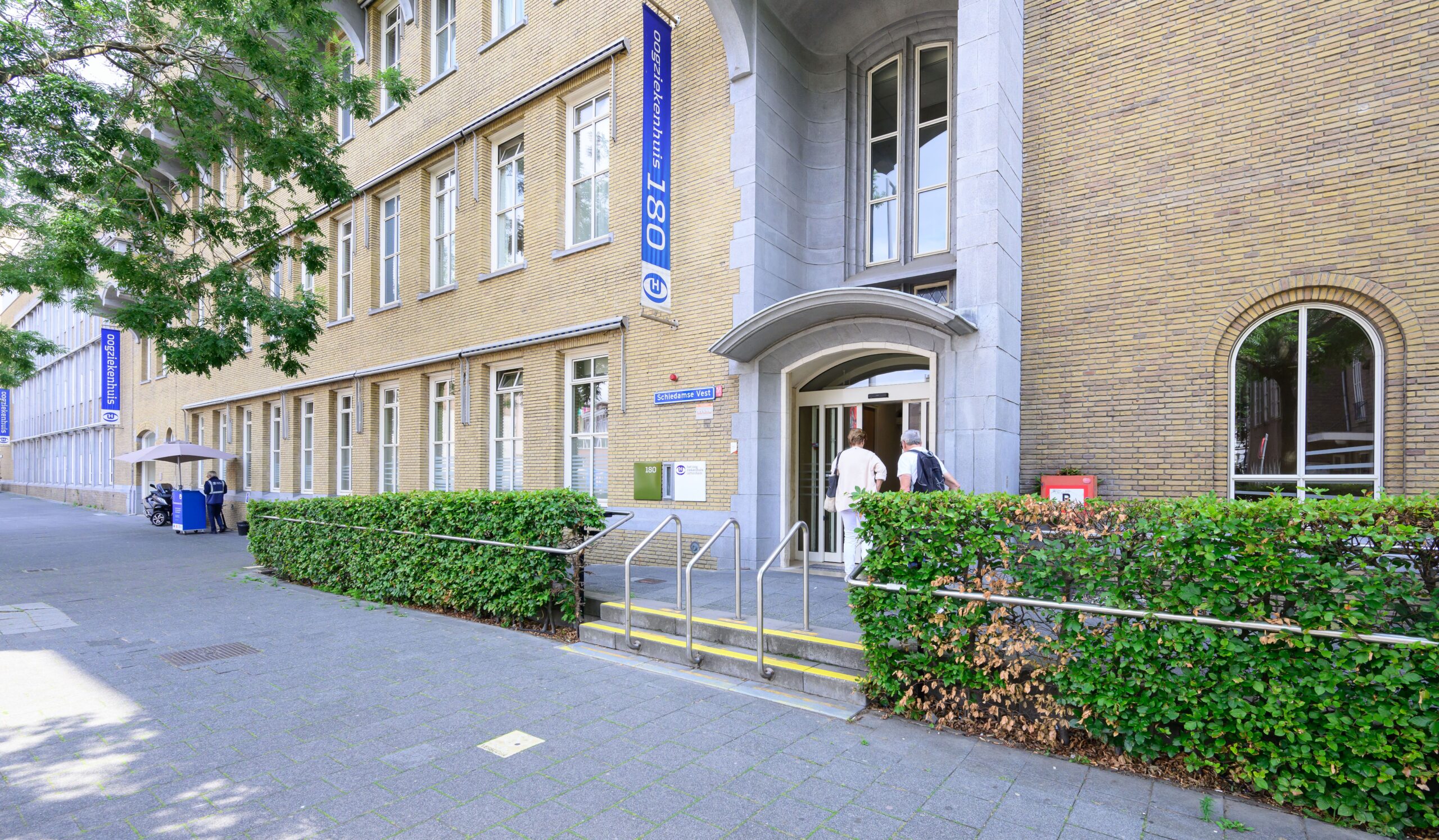
The buildings on Schiedamse Vest, where the Eye Hospital is currently located, will be repurposed after the move. The historic main building will be preserved and given a new function.
