



Which healthcare providers are involved in the care of patients with ocular melanoma?
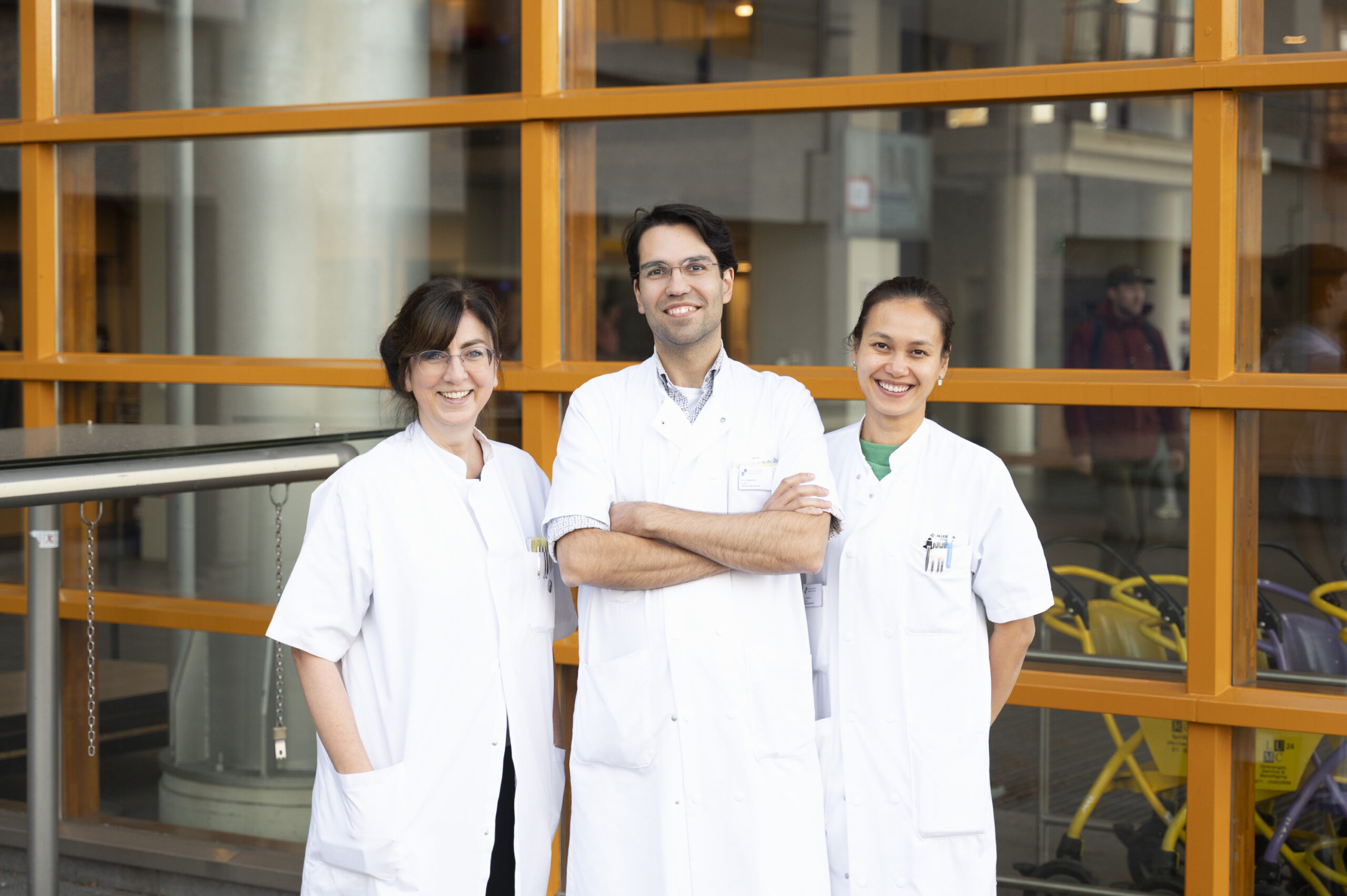
Marina Marinkovic: “In addition to Khanh and myself, ophthalmologist Danial Mohabati is also involved in the care of people with ocular melanoma. And our oncology nurses, Susanne and Joke, play a very important role. When a patient receives a diagnosis and the possible treatments are discussed, a nurse is almost always present. The doctor explains the medical options and checks to make sure the explanation is clear. Afterward, the nurse takes the time to go over everything with the patient. They answer questions, provide brochures, and handle practical matters, such as scheduling appointments for tests. For many patients, the nurse is also an approachable point of contact. People sometimes find it difficult to call a doctor about minor symptoms, but they do feel comfortable approaching a nurse. This way, patients get clarity quickly and don’t have to worry unnecessarily. In addition, nurses play an important role in research on the quality of life of people with ocular melanoma.”
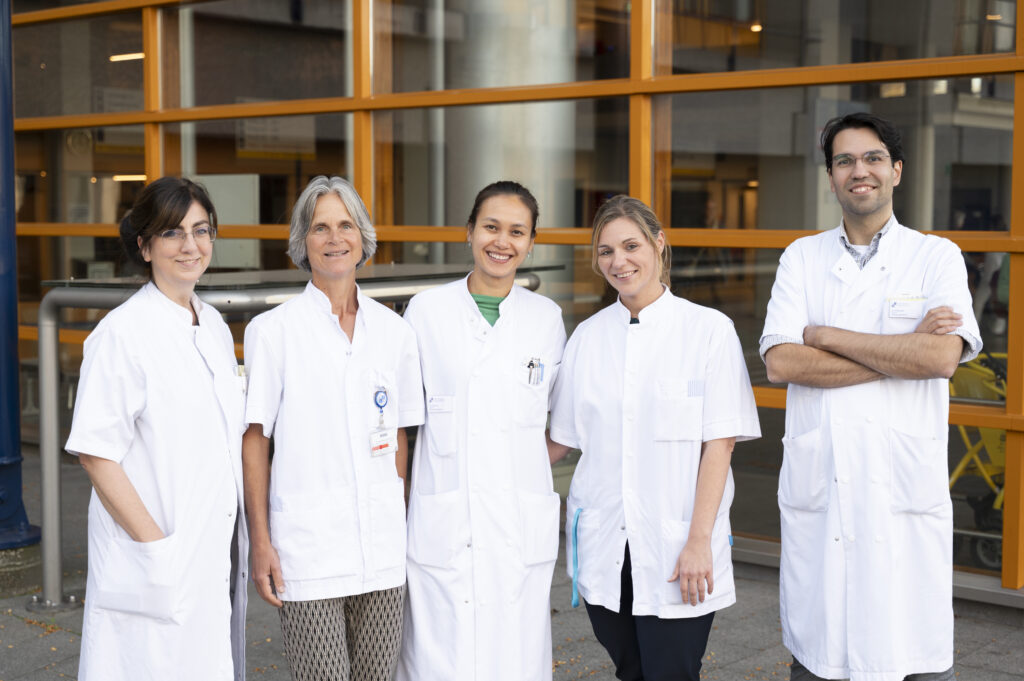
Khanh Vu: “In our department, we hold a multidisciplinary conference (MDC) every week. This means that various specialists come together, such as oncologists, surgeons, and radiologists. There is a large MDO for patients with metastases, as well as a smaller MDO specifically focused on the treatment of ocular melanoma. Researchers also often join these meetings. The advantage of this is that doctors and researchers are gaining a better understanding of one another. Doctors can share their questions, and researchers can demonstrate what’s possible through new research. This allows new insights to be applied more quickly in patient care. Because the team meets frequently, communication is direct, and decisions can be made quickly.”
What is the process like when a new patient with ocular melanoma comes to you?
Marina Marinkovic: “On outpatient clinic days, which are always on Tuesdays, Khanh, Danial, and I are usually all three present. This allows us to review complex cases together, and patients often receive all their tests and a treatment plan on the very same day. Although we’re all capable of treating all types of ocular melanoma, each of us has developed our own specialization over time. For example, I focus primarily on rare tumors at the front of the eye. Danial treats many tumors in and around the eyelids. Khanh is heavily involved in scientific research and in small or questionable tumors, such as moles in the eye. She also guides patients who are eligible to participate in clinical trials.
We always discuss with the patient which treatment is most appropriate. For small tumors, ruthenium brachytherapy is often the treatment of choice. In this procedure, the doctor places a radioactive shield on the eye that emits radiation for several days. In the Netherlands, this treatment is performed exclusively at the LUMC. For larger tumors, or when the tumor is located close to the optic nerve, proton therapy is usually chosen. For this procedure, small marking clips are first placed on the eye during surgery to allow for very precise targeting of the radiation. Stereotactic radiation therapy is also available in Rotterdam. This method does not require clips and therefore does not require surgery, but the radiation is less precise, resulting in a higher risk of complications. In some cases, the eye must be removed, for example, when the tumor is too large or vision is already very poor.”
Approximately how many people receive each type of treatment?
Marina Marinkovic: “By 2024, the LUMC had treated a total of more than 200 people for ocular melanoma. In 52 patients, the eye had to be removed because the tumor was too large or no other treatment was possible. 106patients received ruthenium brachytherapy.” “In addition, 48 patients were treated with proton therapy. These numbers change slightly each year, but the differences are small. The figures were roughly the same in 2023 as well.”
In addition to medical treatment, is attention also given to the psychological aspects of living with ocular melanoma?
Khanh Vu: “Absolutely! During a hospital stay, the LUMC’s spiritual counselor may stop by to ask what a patient needs. This is also discussed during the first appointment at the outpatient clinic. Because many patients come from far away, additional support is often arranged through their own primary care physician or the referring ophthalmologist. Recently, the LUMC has also started collaborating with the drop-in center run by the Scarabee Foundation, which can support people in their own region after they’re discharged from the hospital. In addition, patients receive information about patient organizations such as the OOG in OOG Association and the Melanoma Foundation, where they can find support and connect with others facing similar challenges.”
Studies
Several scientific studies on ocular melanoma are currently underway at the LUMC.
CoMpass
This study focuses on the treatment of ocular melanoma. The eye is a very sensitive organ, and radiation therapy damages not only the tumor but often also healthy tissue, such as the retina or the optic nerve. In this study, a medication called Bel-Sar is injected directly into the eye. This medication binds to the tumor cells and is then activated by a laser that is precisely aimed at the tumor. The goal is to treat the tumor while causing as little damage as possible to healthy tissue. Only people with a small tumor can participate in this study.
DAROV
In a previous study of the drug darovasertib It turned out that not only the metastases but also the tumor in the eye itself responded to the treatment. For this reason, a new study has been launched involving patients with large tumors, who would normally require eye removal or a large radiation field. The goal of this study is to investigate whether the tumor can shrink, making less intensive treatment possible. In addition, researchers are examining whether the drug can also combat small, as yet invisible metastases. This might help prevent visible metastases from developing later on.
ATOM
This study is intended for people who do not yet have metastases but are at high risk of developing them. That risk may be due to a specific genetic variant or a Stage III tumor. These patients will receive immunotherapy for six months following treatment for ocular melanoma. with the drug tebentafusp. This drug is already used to treat metastatic ocular melanoma and, on average, helps people live longer. Not everyone can receive this drug: it works only in people with the HLA-A*0201 blood group. The goal of the ATOM study is to investigate whether tebentafusp, given before metastases develop, can prevent them from occurring later on.
Quality of Life
Finally, the Department of Ophthalmology also conducts a great deal of research on quality of life. Patients are monitored over an extended period to see how they are truly doing. This research shows that many people have mental health issues, which often went unnoticed before. This knowledge helps tailor care more effectively to patients’ needs.
Want to read more?
Would you like to read more about the LUMC’s approach to ocular melanoma? Then visit the LUMC website.
