



The response from our members was overwhelming. Petra received many tips, for which she is very grateful. We asked her to compile the tips and share them with all other young parents. These have been supplemented with additional advice from Dianne de Bruin. Dianne is an elementary school teacher and wears an ocular prosthesis herself.
What can the teacher or school do?
- If there’s a problem with the good eye > Teacher’s action: call the parents immediately. It’s especially important that nothing ever happens to the good eye!
- If there are complaints regarding the “blind spot” >, the teacher should take action immediately by calling the parents.
- Parents: Please report any concerns that may arise to the teacher. • Foster a sense of safety and trust, both at school and at home.
- Be open and transparent about everything, discuss it, and involve everyone in every aspect.
- Teachers should thoroughly inform other school staff. Teachers should take a course through Bartiméus or Koninklijke Visio. This way, teachers can experience, by wearing different types of glasses, what it’s really like to see with only one eye.
- Contact Bartiméus or Koninklijke Visio for additional tips and advice, including for staff.
Position in the classroom
- In preschool, the children usually change seats and start out in a circle.
- Starting in third grade, have the child sit at the front of the classroom. However, this does depend on the child’s height.
- Sit with the side facing the window or wall that has the blind. That way, the side facing outward can see everything.
- Keeping the same seat in class all year long provides a sense of security. Some children don’t like sitting in the same spot all year. Ask them about this.
- Make sure the school uses clear, bright colors that are easily visible.
- Have the other students (after a while, once you all know each other well) experience what it’s like to see with just one eye during gym class. Have the classmates wear an eye patch and have them catch a ball or jump down from a height. This helps children develop a better understanding, and they enjoy doing it.
- When changing classrooms, let the students explore the space beforehand. Safety
- Have the child wear glasses during outdoor or sports activities to protect the healthy eye.
- Classmates are walking around with scissors and sticks. Have the teacher point this out and keep an eye on it. Children understand this.
- Pay extra attention when the children are playing outside, so that the teacher can acknowledge the child by saying, “… [Name] … I see you.”
- If necessary, when playing outside, have the teacher wear something brightly colored so that children can immediately see where the teacher is standing; this gives them a sense of security.
- Provide extra guidance, for example, by having an intern at the gym. The children cannot perceive depth or height. Badminton and ball games, in particular, are difficult at first for children who see with only one eye.
- Throwing soft balls or a balloon back and forth.
- Install an extra mirror on the child’s bike.
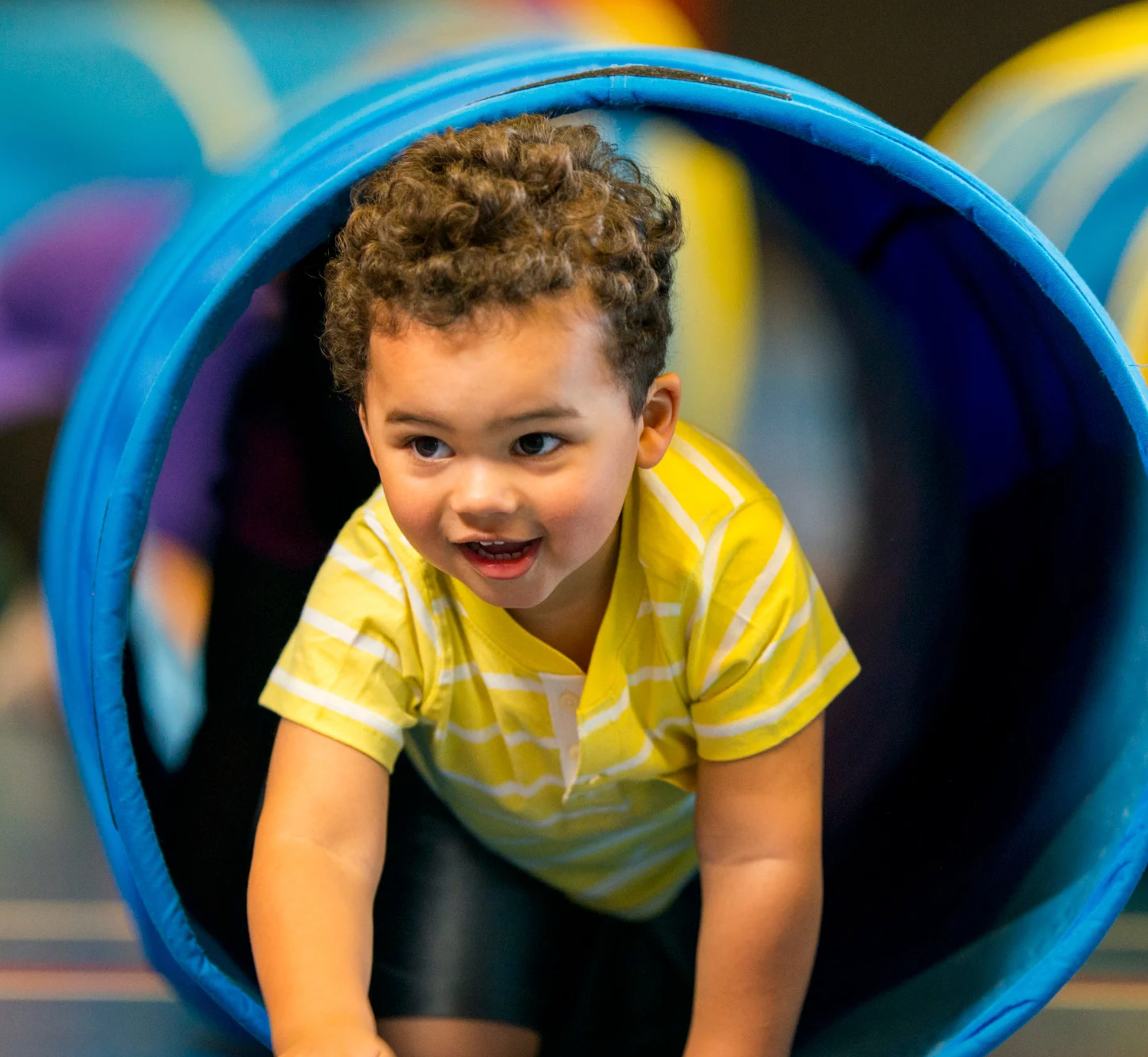
- Toddler Gym for Motor Skills Development.
