



By Jelmer Remmers, ocularist
Patients usually arrived with a companion and stayed in the Netherlands for a period of time to ensure they could receive any necessary follow-up care. Some patients had underlying medical conditions, which made it very difficult and required a great deal of preparation to continue providing all the necessary medical care. In some situations, a referral was even impossible for this reason, leaving these patients without access to ocular prosthetic care. This led to the idea of a so-called “reverse referral”—an arrangement in which the healthcare provider is sent instead of the patient. If there is sufficient support for this approach, it is also more cost-effective and less harmful to the environment.
Preparation
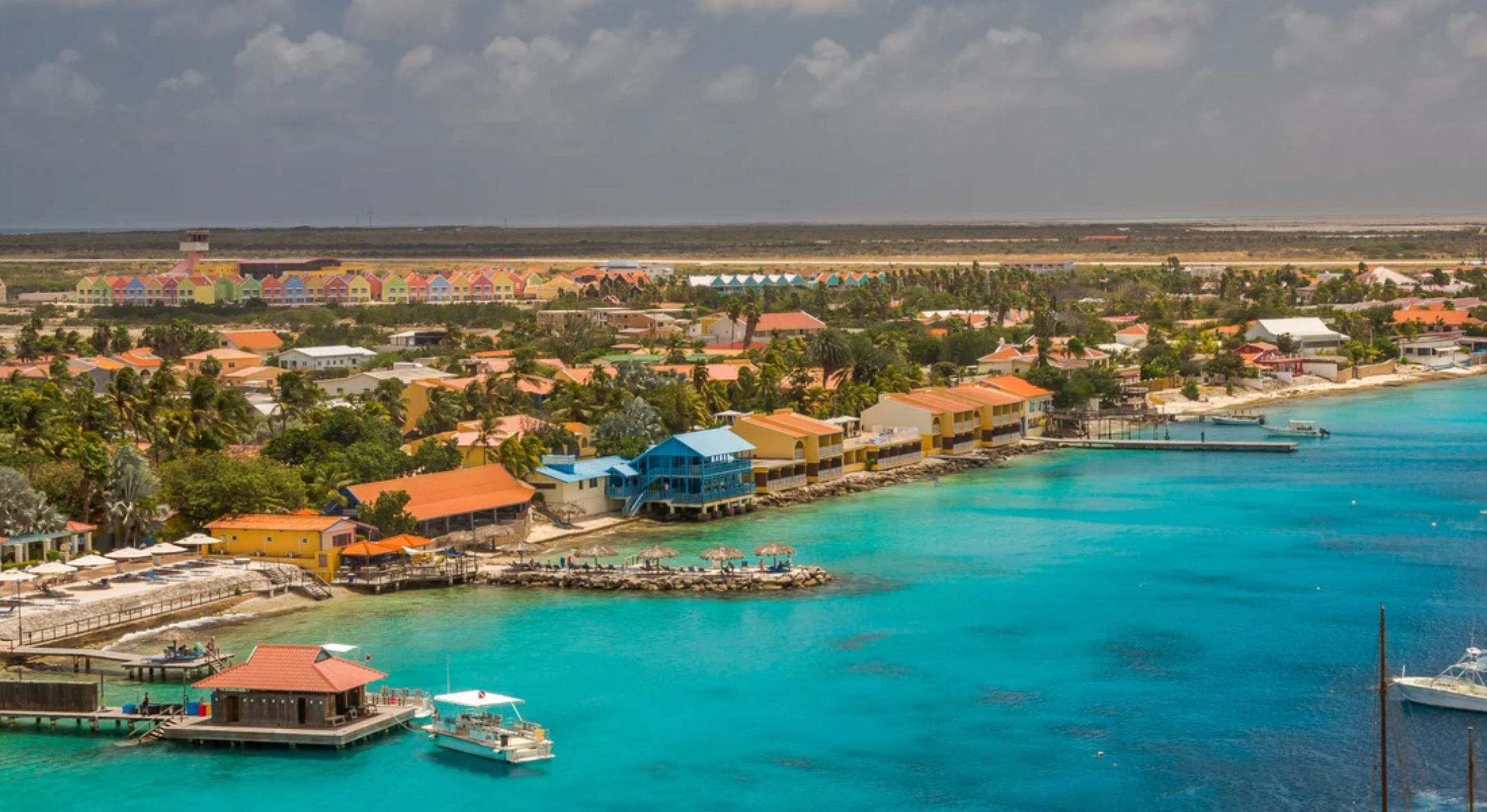
Since 2012, there has been a close partnership between Amsterdam UMC and Fundashon Mariadal (FM)—a so-called “twinning” arrangement. On this basis, doctors and paramedical staff from Amsterdam UMC are sent to Bonaire on a weekly basis for periods ranging from one week to several years. Given my appointment at Amsterdam UMC and the partnership with FM, it was a logical step to choose Bonaire as my work location to begin making ocular prostheses for patients in the Caribbean Netherlands. Although only patients from Bonaire were treated during this pilot visit, patients from Aruba, Curaçao, Sint Eustatius, and Saba will also be able to visit my clinic during the next deployment.Contact was made with the Dutch Government Agency for Health, Youth, and Youth in the Caribbean Netherlands (ZJCN), a division of the Ministry of Housing, Welfare, and Sports (VWS). ZJCN acts as a health insurer, and a healthcare agreement was concluded with them, similar to the agreements my practice has with all health insurers in the Netherlands. This agreement included the intention to visit Bonaire at least once a year.
Reverse Transmission
After a nine-hour flight and a day to recover from jet lag, we set up a temporary laboratory at the FM ophthalmology clinic. Some of the equipment we brought with us was left at the clinic for future working visits. Dr. Stappers selected the patients who were eligible for an ocular prosthesis and arranged for the necessary facilities at the clinic. Within a week, we were able to treat patients who had been deprived of adequate ocular prosthesis care for a long time. In some cases, no prosthesis had yet been made. In other cases, the eye socket was severely inflamed or even contracted (contracted socket syndrome) as a result of an ill-fitting prosthesis (I even saw a homemade prosthesis made from melted-down PET bottles!) or a heavily soiled or damaged prosthesis. Furthermore, the cosmetic quality often fell short of the standards typical in the Netherlands, allowing for improvements in this area as well. Dr. Stappers now has the proper equipment, materials, and skills to polish an ocular prosthesis in the event of complaints (irritation, discharge). In this way, the continuity of ocular prosthesis care in the Caribbean Netherlands is better ensured. In summary: the trip to Bonaire for ocular prosthesis care was worthwhile. And, to be honest, it was also enjoyable. Thanks to Dr. Stappers and nurse Undine Nahorst of Fundashon Mariadal, the staff at ZJCN, and the patients in Bonaire for their trust. Saludos!
