


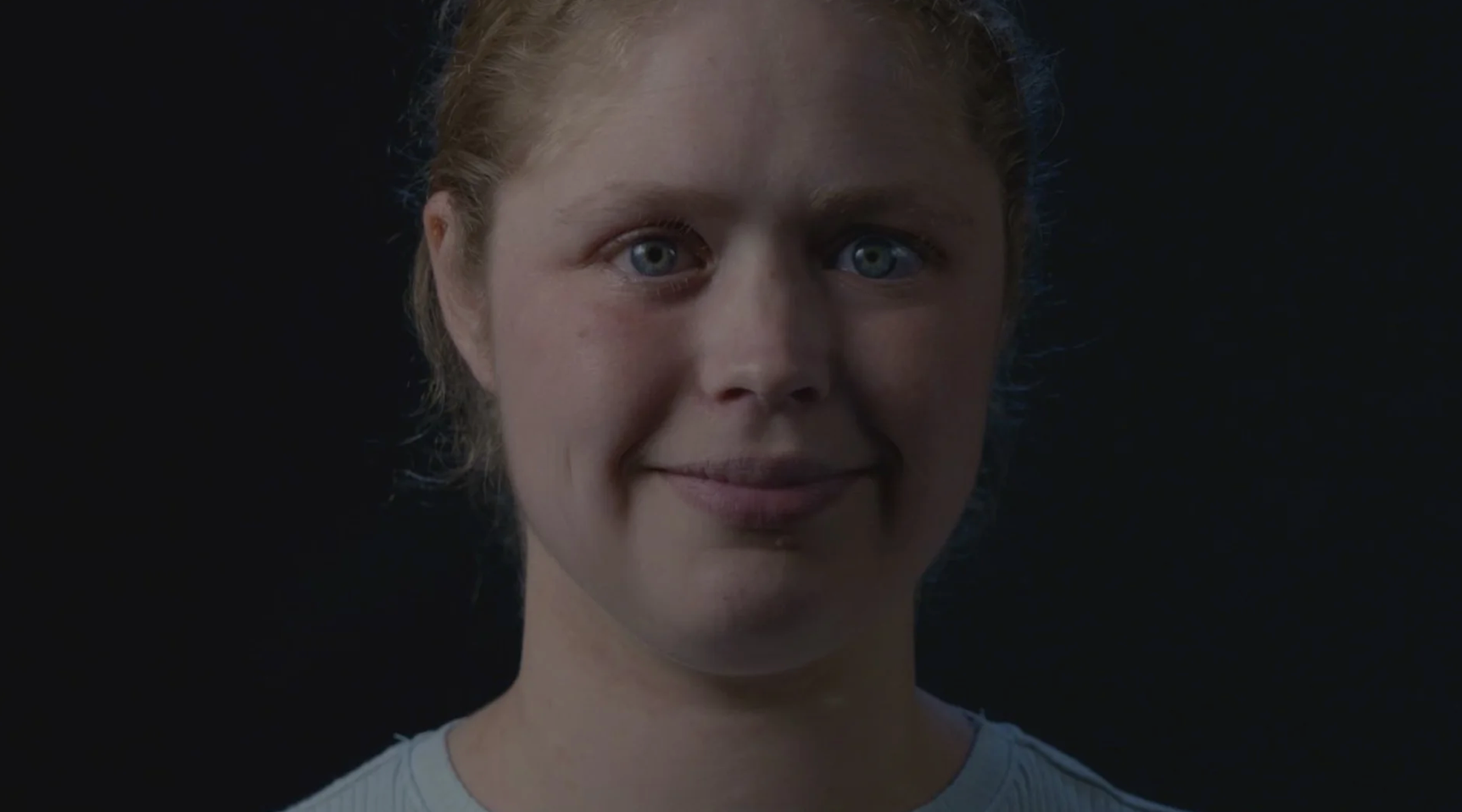

We see him at work alongside painter and prosthetist Julios Veizaj. They create the prosthetic eyes through modeling, scanning, and traditional painting techniques. While Jelmer and Julios focus on the tiniest details during the creation process and pay close attention to the patient’s reactions, we also get a good sense of what the new eye can mean for the patient.
So there are plenty of reasons to interview director Eline van Diggelen about the background of the documentary.
How did you come up with the idea for the movie?
Eline: “I actually came up with the idea for a film by chance. Jelmer and I both live in Leeuwarden, and we’re neighbors. We got to talking, and he told me he’s an ocularist—someone who makes artificial eyes. At the time, I’d never heard of that before, and I’d never seen an artificial eye either. It turned out to be much flatter in reality than I’d initially thought. I was surprised by how such a prosthesis is made. Everything that goes into it—that aspect fascinated me. It’s truly wonderful that you can create something with such care that is so important to someone else. My initial idea was to focus on the creation process. The care and attention that go into the work. I wanted to show that this attention is important and generous. I also wanted to portray the people receiving the new eye. What does it feel like for someone to see themselves in the mirror with a new eye for the first time? An important theme in the film is that people want to be meaningful to others. I think this is every person’s deepest desire. Especially in today’s world, where people are sometimes pitted against one another.”
The Manufacturing Process
“Jelmer put me in touch with people who are missing one or both eyes. He was a huge help in selecting the participants: who wanted to take part, who wanted to be on camera? Some people are too vulnerable for that, and Jelmer knows that because he knows everyone personally. I spoke with the participants beforehand and explained what I wanted to do: fortunately, every single one of them was enthusiastic. The shoot—the filming—took place over two days. On one day we filmed three participants, and on the other, two. It went so smoothly because everyone already knew how and what I wanted to film. At the end, you see the people through a one-way mirror. They could see themselves in the mirror, but not the camera filming from behind it. Immediately afterward, I interviewed the participants about their experiences and recorded only the audio from those interviews. Some already had an ocular prosthesis; two were seeing themselves with a new eye for the first time. Coincidentally, those were the two men.”
“Wow, that’s so beautiful!”
“One of them was very emotional when he saw his ‘new face.’ It happened spontaneously; we hadn’t anticipated that. I comforted him, and we talked for a while. After that, he looked happily in the mirror again. It wasn’t until the premiere at the Plons Film Festival that the significance of an eye prosthesis for the recipients became clear to me. One of them was present at the documentary’s premiere. She was in tears and told me that she finally has something to show others so they can understand what it’s been like for her. Only then did I realize that the film holds tremendous significance for all people with an artificial eye.”
Watch the documentary:
