


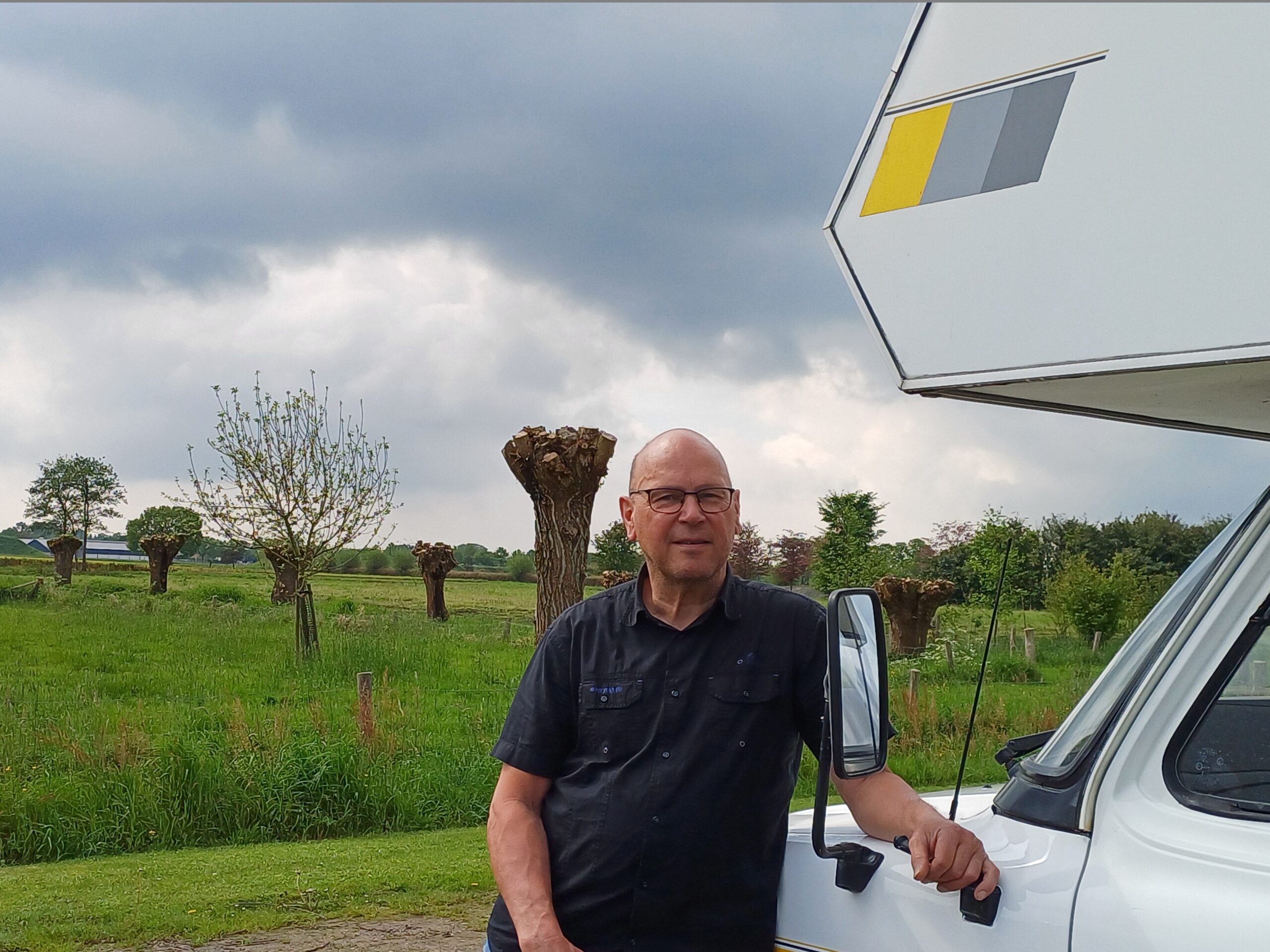

By Fred van Zon
Of course, life goes on as usual after a heart attack, but with good advice and the right lighting, it’s much easier to live with this visual impairment.
Lighting
My primary care physician referred me for an eye exam at Bartiméus, where they conducted a thorough examination of my eyes and documented the results in a report. There, they were able to determine, among other things, which color and intensity of lighting would work best for me, and at a later stage, someone came to my home to recommend the right lighting. Reading a book, in particular, has become much easier for me as a result, but the option of audiobooks was also discussed at length. I was also advised to take time to close my eyes for a moment when they’re tired, which is sometimes necessary at the end of the day. And wearing sunglasses and a hat or cap in sunlight was a helpful recommendation—it gives my eyes some rest.
Driving
I also received other advice from Bartiméus, such as to sign up for a driving lesson at a driving school that specializes in driving with a disability. So I spent an hour and a half driving around with an experienced driving instructor. Estimating distance—especially when backing up—is something I’ve had to relearn, and the instructor gave me a few tips to make it easier to master. At an intersection, I found it difficult to properly notice all the traffic—especially cyclists and pedestrians approaching from the left. Here, I was advised to look not just once, but twice or more. That takes a few seconds longer, but it’s definitely much safer in traffic.
Increased risk of stroke?
The OOG in OOG magazine featured an interesting article by an ophthalmologist about eye infarcts and a potentially increased risk of stroke. I discussed this with my primary care physician, who in turn asked my ophthalmologist whether this applied to me as well. The ophthalmologist wrote my family doctor a very technical explanation about this, and my family doctor tried to explain it as best as possible in “layman’s terms,” but it wasn’t really clear.
I took the magazine article with me to my eye care specialist (optometrist), and he explained to me—using visuals and language that was clear to me—that my ocular infarction had a different cause than the one mentioned in the article. This made it clear to me that I didn’t need to worry.
There is room for many improvements
What I want to make clear in my writing is that there are many opportunities in the Netherlands to live well with a disability, although it is a shame that you have to figure out the right path for yourself. The ophthalmologist told me it was an ocular infarction and that there was nothing that could be done about it, which is, of course, true. But in the meantime, I’ve learned a lot more—including that improvements are indeed possible. Not with the eyes themselves, but in how you can cope with it. Hopefully, this article will help others to keep looking for more ways to make improvements.
It’s great that there’s an organization like OOG in OOG that can advise people with visual impairments on the options available to them.
Read the previous article with Fred van Zon here.
