


Jeremy (34):
“I cried quite a lot as a baby. Especially when I was put down. My grandma was the first to notice. She saw a kind of gleam in my eye. It looked a bit like a cat’s eye. The family doctor referred us to the Rotterdam Eye Hospital. There, they immediately knew what was going on. It was bilateral retinoblastoma. My right eye was eventually removed. When I came out of anesthesia, I started smiling right away. It seemed like the pain was gone. That was followed by months of radiation therapy in Utrecht. I still have about 15 percent vision in my left eye.”
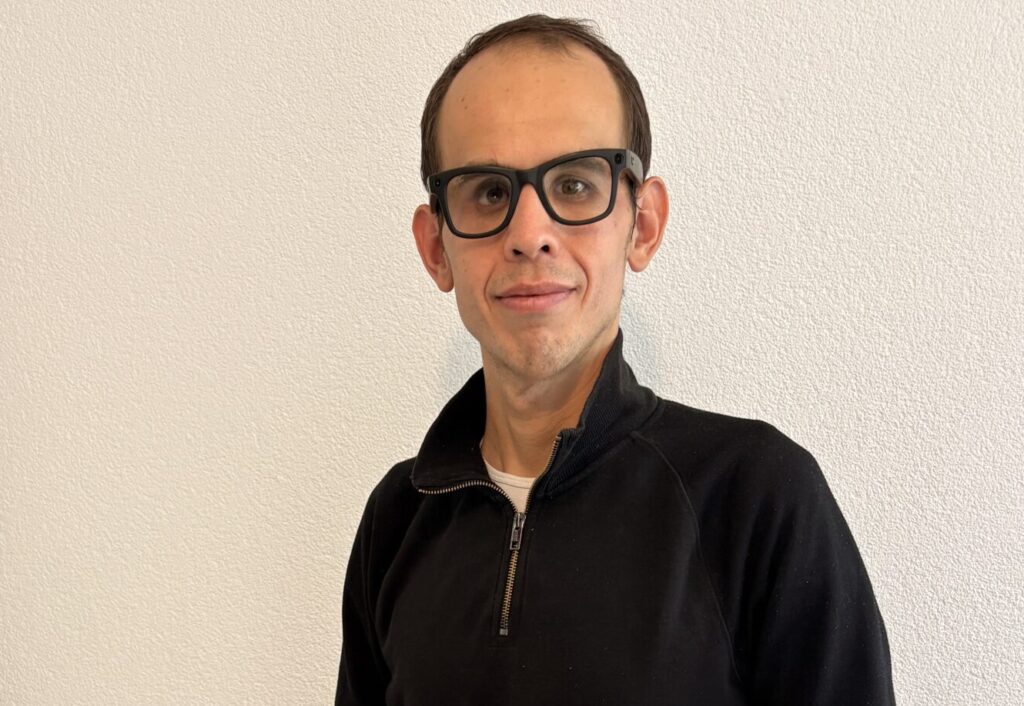
After that, my life actually went on pretty normally. After first and second grade, I started special education at Koninklijke Visio in Rotterdam. That wasn’t a success. I was bored out of my mind. I started bullying other kids. Then I went back to mainstream school. I felt much more at home there. I was never bullied there either. I think that’s because I’ve always been very open and honest about my condition. If I felt like a classmate was staring at me, I’d immediately say something like, “Yeah, I’m very visually impaired. And if you want to make jokes about it, go ahead, but they’d better be good jokes.” That usually took the fun out of it for potential bullies.
I’ve never really struggled with the fact that I have very low vision. I currently work as a Customer Success Manager for a software company. That’s where I met my wife, Zahra, seven years ago. We now have a family. Zahra already had a daughter, Emma (11), from a previous relationship, and our daughter Everly was born four years ago. I have a truly wonderful life. I have a very positive outlook on life.
“My work is primarily business-oriented. But I also want to make a difference in other people’s lives. And why wouldn’t you do that for the very group you’re a part of yourself? That’s why I want to put my knowledge and experience to work for the OOG in OOG Association.”
Zahra (35)
“Jeremy and I worked together a lot. I did notice that there was something wrong with his eye, but he also wore glasses, so it didn’t really stand out at all. I didn’t realize he was visually impaired—the way he did his work, the way he walked around the office. You couldn’t tell anything was wrong with him. So at one point I asked him, ‘Why do you always hold your phone so close to your eyes?’ That’s when he told me his story. He does a lot around the house, too. He’s always cooking and takes the kids on bike rides through The Hague on our electric cargo bike. But it can be pretty tough at times. His visual impairment also affects our lives. Of course, he can’t drive. So taking the kids to and from their sports activities and visiting family in other cities all falls on me. If we go to the beach, I’m the one responsible for keeping an eye on the kids. Sometimes I do feel a bit like the man in the relationship.
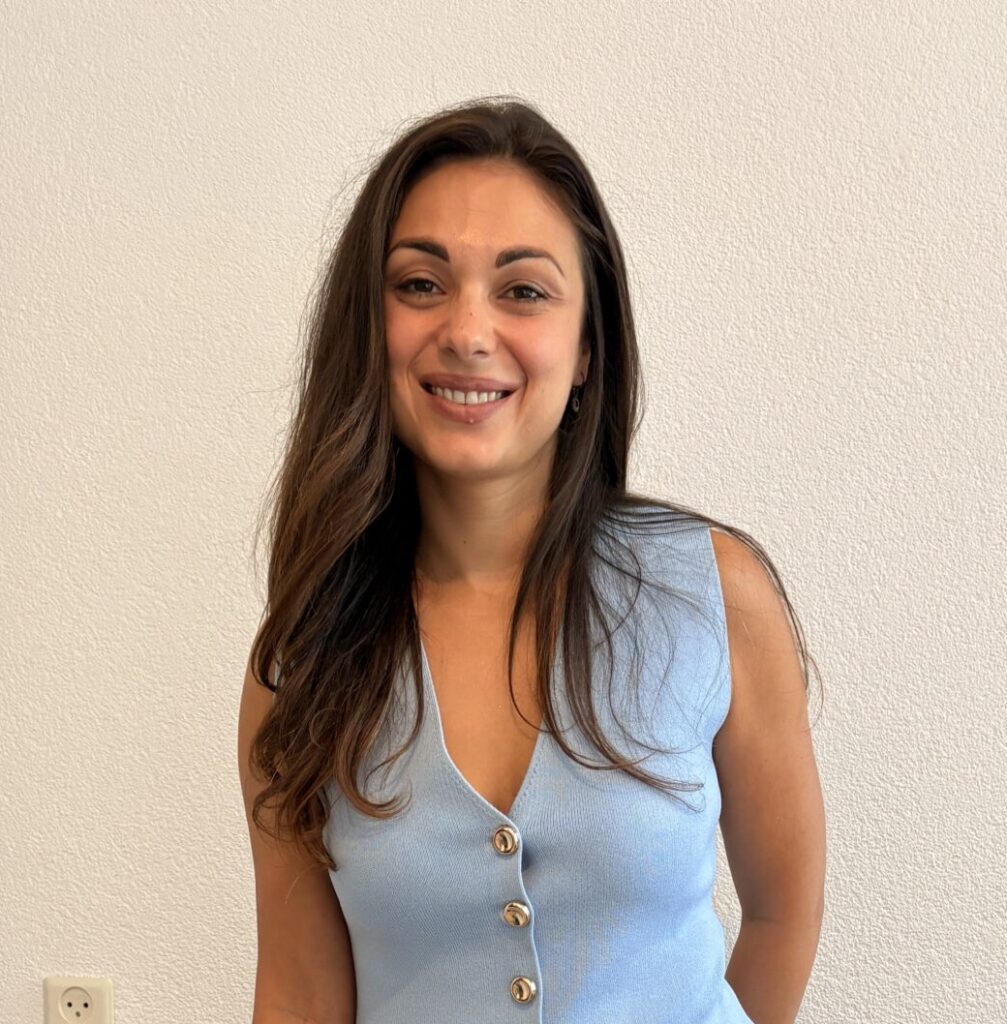
So we found the decision to have a second child quite difficult. Jeremy has a genetic predisposition. We had many helpful discussions at the Amsterdam UMC with the clinical geneticist. Ultimately, we opted for embryo selection (PGT process). Jeremy has a very positive outlook on life, but there’s no guarantee that your child will be just as lucky. You don’t want your child to blame you later for being born. But while we were still in the midst of those discussions at the hospital, I unexpectedly became pregnant. It was wonderful, of course, but also nerve-wracking. We ultimately decided to have an amniocentesis so we could be certain the baby wouldn’t have any genetic conditions. Fortunately, that turned out to be the case.
Our oldest daughter, Emma, is very down-to-earth. When other kids ask about Jeremy’s eyes, she just says, “Oh, he has a fake eye,” and goes back to what she was doing. Everly is more sensitive. She recently started elementary school, and a child there made a comment about Jeremy. When he heard that, Jeremy wanted to go straight to the optometrist to get glasses, because he didn’t really want to burden Everly with this. But in the end, we came to the conclusion that it’s better to teach your child that it’s okay for people to look different and that there’s no need to be ashamed of that.”
