


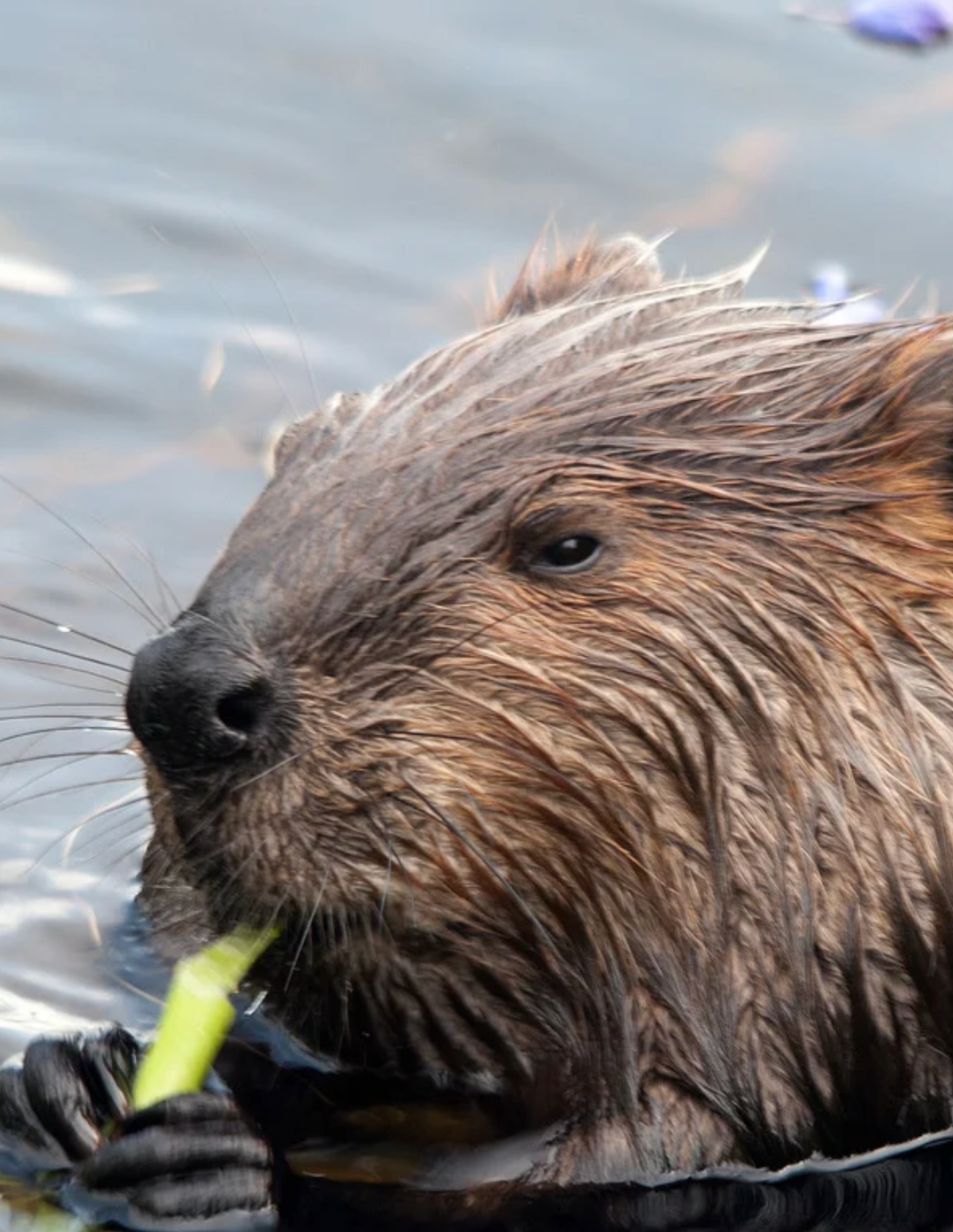

When we’re telling a story, we sometimes just stop in the middle of it. Then we spot a bird in a tree or in the water. Or something else interesting: a little plant, an insect, a badger’s or a roe deer’s paw print, or a beaver’s gnawing mark. When we point these things out to the participants, they often react with surprise: “You notice that so quickly…” Then I sometimes think to myself with a chuckle: “Yeah, and with just one eye!”
I had a conversation with my somewhat older and super-enthusiastic colleague Henny about how wonderful it is to stroll through nature with people and teach them to appreciate it. He said he would be really upset if something happened that prevented him from continuing this volunteer work. Hesitantly, he asked if I’d mind telling him how I lost one of my eyes. I gave him the very short version: a malignant tumor in a lacrimal gland; the tumor and the eye were removed, followed by radiation therapy. This gave me the best chance of survival.
Henny, who’s always talking, fell silent for a moment and then asked, “Did you expect back then that you’d be able to do what you’re doing now?” Because I know how afraid he is of no longer being able to do what he loves so much, I had to swallow hard before I answered. “No, I didn’t expect that. I was afraid I wouldn’t be able to do the things I used to love so much: working with groups, birdwatching, reading books. And now I’m actually sometimes surprised by all the things I am able to do!”
Apparently, my story had eased his anxiety a little, because his face brightened, and as he slapped my shoulder in his own enthusiastic way, he said, “When something happens to a person, it turns out they can handle more than they think!”
Anita Hol-Bubeck
