



Ellen (62)
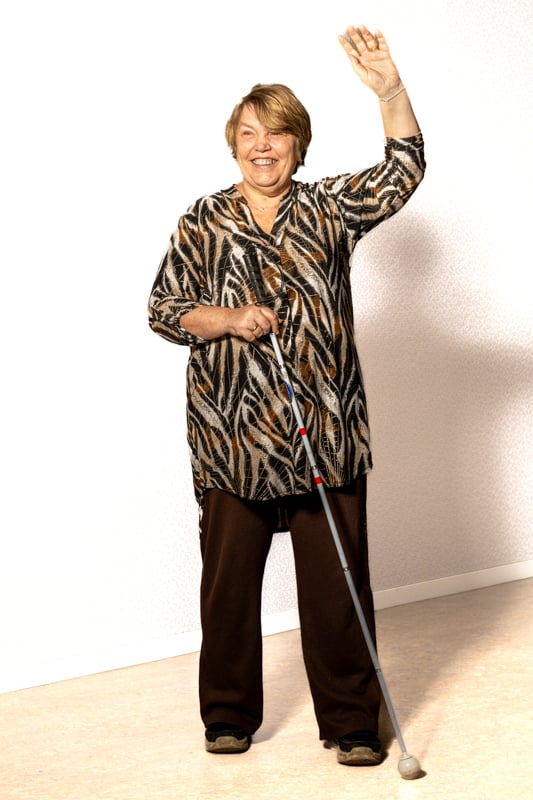
“I was born with impaired vision. I had congenital cataracts, just like Princess Christina. Because of that, I also developed nystagmus—shaky eyes. My vision has never been better than 15%. That was after many surgeries, but they actually only helped temporarily—or hardly at all. When I was seventeen, my vision was at its best. That’s when I started dating my husband, Bert.”
I got married young and had children early in life. As I got older, my vision kept getting worse. About 25 years ago, I suddenly started having a lot of pain in my right eye. That wasn’t part of my condition. The pain kept getting worse. It felt like someone was cutting into my eye with knives. A lot of tests were done, but the doctors couldn’t find anything. They couldn’t find a treatment for the pain either. I tried everything: injections in the eye, acupuncture—you name it. Nothing helped. I lived with a very painful eye for almost 18 years.
Eventually, I saw an ophthalmologist who said it would be best to remove my right eye. That’s what happened. I was given a nice artificial eye. I was relieved. I could still see 5% with my other eye, and the pain was gone. My life could move forward again. But six weeks later, the pain started in my other eye, too. That’s when I knew: this is going to happen again. So I very consciously said goodbye to everything I could still see. My husband, my children, my grandchildren, my mother. I stored everything in my memory. That was very difficult.
On February 20, 2018, my second eye was removed. Since then, I’ve been blind and have two artificial eyes. I’m proud of that. People don’t notice it unless I have my cane and guide dog with me. The artificial eyes even move with me and wobble a little when I’m tired.
During that long period, I also underwent therapy, including Acceptance & Commitment Therapy. That helped me tremendously. I used to be sad a lot and felt like a victim. Now I look at my life differently. I focus on what I *can* do and how I want to live my life. That has made me stronger and more positive. But my boyfriend Gerdinant has also made me a happier person. He’s my best person to talk to.”
Gerdinant (54)
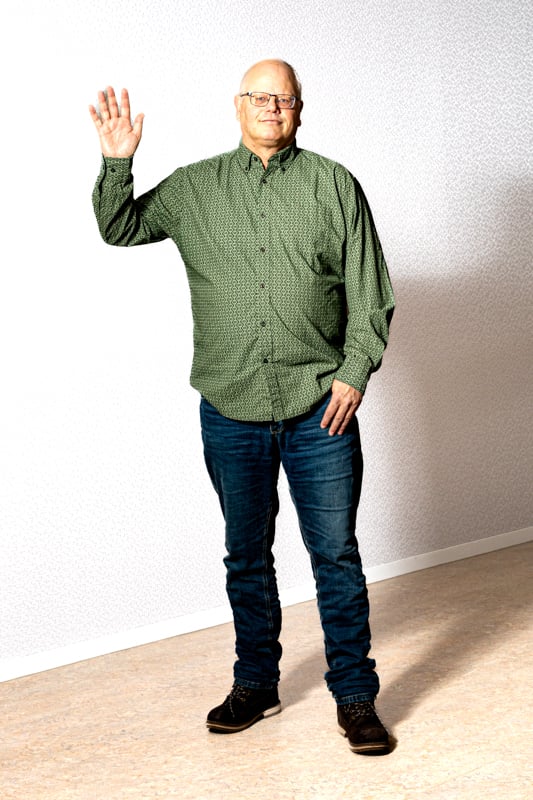
“I was Ellen’s taxi driver back when she had to go to the hospital often. I drove a lot of people who were unwell. I had good conversations with many of them. But with Ellen, it was different. We really had deep conversations with each other.”
What she went through was something I could relate to. I understood her feelings very well. That’s because I have PTSD and an impulse control disorder. I was able to hold up a mirror to her. Ellen was very down at that time. I always try to listen carefully to people first. Then I try to help them see things differently. Not everything gets better, but sometimes you can put a different spin on life. I always focus on the person and not on the disability. Whether someone is in a wheelchair or has poor eyesight, I talk to that person, not to the wheelchair or the eyes. Ellen appreciated that. She felt seen as a person.
I don’t drive a taxi anymore. I’ve had two heart attacks and a stroke. That’s changed my life. But Ellen’s still here. I visit her every week now. We’ve become friends. When I leave Ellen’s place, I often find myself thinking about life. She gives me strength. I have enormous respect for her. She takes on challenges that many people wouldn’t dare to try. She rappelled down the Euromast, rode on the back of my motorcycle, and went on the zip line at the pier in Scheveningen. On top of that, she also does a lot of volunteer work.
The insecure victim I first had in my taxi has become a strong woman. People who haven’t gone through things like that themselves do their best to understand you. But they can’t truly understand. That’s why recognition from peers who’ve been through the same thing is so important. Ellen and I understand each other. That’s what makes our friendship so valuable.”
