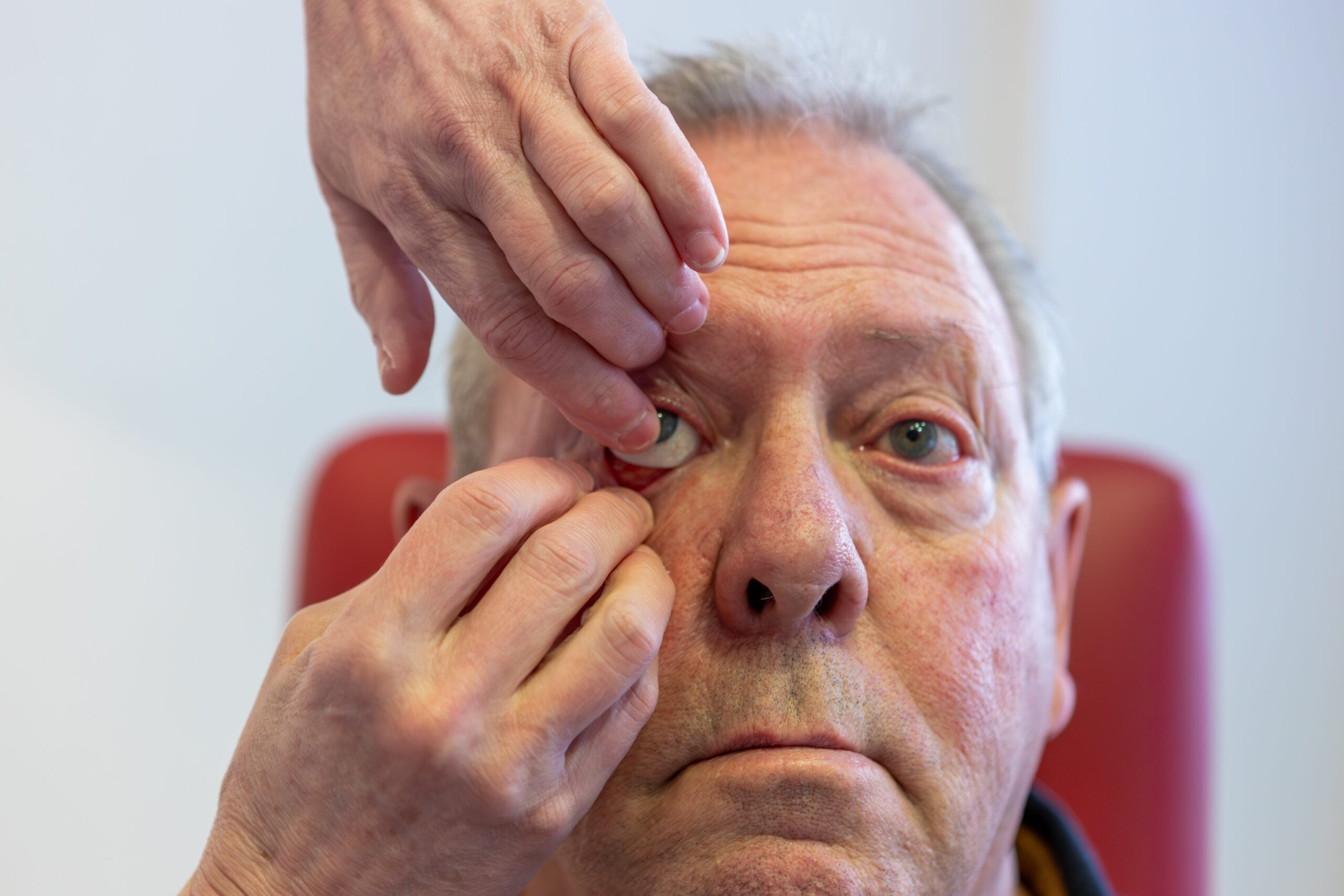
Take part in a study on eye discharge
During the 2023 National Contact Day, physician-researcher Arthur Liu gave a presentation on a common problem: irritation and discharge associated with prosthetic eyes. Often, the prosthetic eye is wet or mucus suddenly oozes out of it. This is an annoying side effect that many of the attendees recognized. Arthur will be collaborating with others to conduct research on treating this problem. The study is called SOCKEDD.

Causes of Discharge
Arthur says, “It’s really annoying to constantly have to wipe away the mucus and discharge. There can be several reasons for this gunk. An inflammation caused by a bacterial or viral infection, a poorly fitting prosthesis, or a prosthesis that hasn’t been polished in a long time. These are all causes of discharge. There are treatments and solutions for these causes. Doctors and ocularists can prescribe antibiotics or have the prosthesis polished or adjusted. But these measures don’t always work. And we don’t always figure out what’s causing the gunk in the eye.”
Possible solutions
In such cases, the doctor or ocularist usually prescribes something based on their experience. These are usually artificial tears, vitamin A ointments, or anti-inflammatory medications. However, there is no real scientific evidence to support these treatments. What actually works best? And is it the same for everyone? The research team wants to find answers to these questions. The goal is to develop guidelines for primary care providers, ophthalmologists, and ocularists. By doing so, the researchers hope to prevent eye prosthesis wearers from having to try different treatments before finding the best solution.
The Study
In a pilot study, the researchers will test artificial tears, vitamin A ointment, and anti-inflammatory drugs on prosthetic eye wearers with long-term symptoms. Arthur: “With this study, we hope to find out which treatments work best in which situations.” The researchers are looking for ocular prosthesis wearers over the age of sixteen who recognize the symptoms described here. It is important that the most common causes of irritation have been addressed, such as a condition affecting the eye socket, a damaged or ill-fitting prosthesis, or a prosthesis that has not been polished for more than a year. Arthur continues: “It’s also important for people to know that the treatments we’re comparing are approved medications with a low risk of side effects. Participation does require time and effort from participants, as they must use eye drops for several weeks according to a dosing schedule. We document participants’ experiences using questionnaires containing four questions. There is also a one-time intake interview with a few standard ophthalmic examinations. People who participate in the study will have the opportunity to discover which treatment works best for them, and it could also provide immediate relief from their symptoms. Plus, it’s, of course, a wonderful opportunity to contribute to science.”
Join us!
Do you have any questions about participating in this study? If so, please contact Arthur Liu, principal investigator, by email at a.y.liu@amsterdamumc.nl